
Book
- 2 Thessalonians
- 2023
- Advent
- Buddhism
- Christmas
- Ephesians
- Epiphany
- Hebrews
- Isaiah 11
- Isaiah 12
- Isaiah 2
- Isaiah 35
- Isaiah 60
- Isaiah 63
- Isaiah 65
- Isaiah 7
- James 5
- Luke 1
- Luke 16
- Luke 17
- Luke 21
- Matthew 1
- Matthew 11
- Matthew 2
- Matthew 24
- Pentecost
- Psalm 146
- Psalm 148
- Psalm 72
- Psalm 80
- Psalm 98
- Reading Scripture with the Land
- Romans
- Tree
- Year A
- Year C
- advent
- victoriamarie
- wilderness
- yearB
Wild Lectionary is for those who want to preach on climate justice themes. In scripture, landforms, skies, waterways, and creatures are transformed. In the world around us they are transformed as well by the advancing global climate crisis. Repeatedly we are called to attend to the wisdom of the more-than-human world. Each week a different contributor offers commentary on the lectionary readings, suggestions for preaching, and links to additional material. We hope you will use and share these resources.
-
We are hoping to keep this resource going year-round. If you are interested in collaborating, e-mail Laurel.
-
For preachers who want to engage with scripture and with climate crisis here are some tools for approaching biblical texts.
Know and be rooted in your watershed. It has long been understood as good homiletic and exegetical practice to name your social location -the webs of relationship, power and identity which influence your approach to and understanding of scripture. It is perhaps equally important to be aware of your ecosystem location, how your experience of and connection to drought, harvest, storm, herding, and fishing are at play as you encounter these themes in scripture. What are the creature kin, the predators, the waterways, landforms and plants of your place and your heritage that help you to understand (or cause you to misunderstand) the Galilean fishing economy, the Cedars of Lebanon, the lion of Judah, the true vine, the Good Shepherd and the lamb of God?
Focus on Climate Justice. Credited to various activists from the global south, climate justice is a term that asserts that the impacts of global climate change and the work of responding to it are not borne equally. Racialized, impoverished, Indigenous, coastal and island peoples experience the greatest impacts while bearing the least responsibility and are at the forefront of movements for land defense, mutual aid, and corporate and governmental accountability (Gabbatis and Tandon, 2022). Bringing a climate justice approach to scripture means focusing not simply on “creation” or “the environment” but addressing the interrelationships between human and ecological exploitation, extraction, displacement, and inequity.
Apply Eco-Justice Principles. Norman Habel and the Earth Bible Project have identified six principles in scripture.
The Principle of Intrinsic Worth: The universe, Earth, and all its components have intrinsic worth/value
The Principle of Interconnectedness: Earth is a community of inter-connected living things that are mutually dependent on each other for life and survival.
The Principle of Voice: Earth is a living entity capable of raising its voice in celebration and against injustice.
The Principle of Purpose: The universe, Earth and all its components are a part of a dynamic cosmic design within which each piece has a place in the overall of that design.
The Principle of Mutual Custodianship: Earth is a balanced and diverse domain where responsible custodians can function as partners with, rather than rulers over, Earth to sustain its balance and a diverse Earth community.
The Principle of Resistance: Earth and its components not only suffer from human injustices but actively resist them in the struggle for justice.
Use an Eco-Feminist Lens. The Rev. Dr. Leah D. Schade “the eco-preacher” has developed four additional principles.
Focus on Earth-orientation rather than focusing strictly on humans, and particularly male humans. Read Scripture through a “green lens” to ascertain how texts may be oppressive or liberating to women, children, those most vulnerable, and the Earth community.
Proclaim the good news for both the human and other-than-human community of Earth. Analyze the impact and power that certain texts will have when preached in a community of faith within its ecological context.
Practice a hermeneutic of remembrance. Recover biblical traditions so that we can view the biblical story from an ecofeminist perspective, moving away from the inherent human-centeredness and male-centeredness of texts that assume subordination of Earth and women.
Engage creative actualization. Tell stories from Earth’s and women’s perspectives. Reformulate narratives lifting up the discipleship of equals among human communities and with our Earth kin.
Consider the Ecological Triangle of God, Non-Human Creation, and Humanity. Hilary Marlow proposes this alternative method of ecological engagement which allows the texts to speak for themselves. She asks:
What understanding does the text present of non-human creation (local or cosmic)?
What are the assumptions of the author about God’s relationship to the created world?
What effects do human actions have upon non-human creation and vice versa?
-
It costs approximately $275 CAD for the work of research, writing, editing, coordinating and hosting one week of resources on Wild Lectionary. If you have appreciated this faithful climate justice resource please consider sponsoring a page or asking your congregation to do so. It is a gift that benefits so many.
Pentecost Year C
“In the last days it will be, God declares, that I will pour out my Spirit upon all flesh, and your sons and your daughters shall prophesy, and your young people shall see visions, and your old people shall dream dreams.” (Acts 2.17)
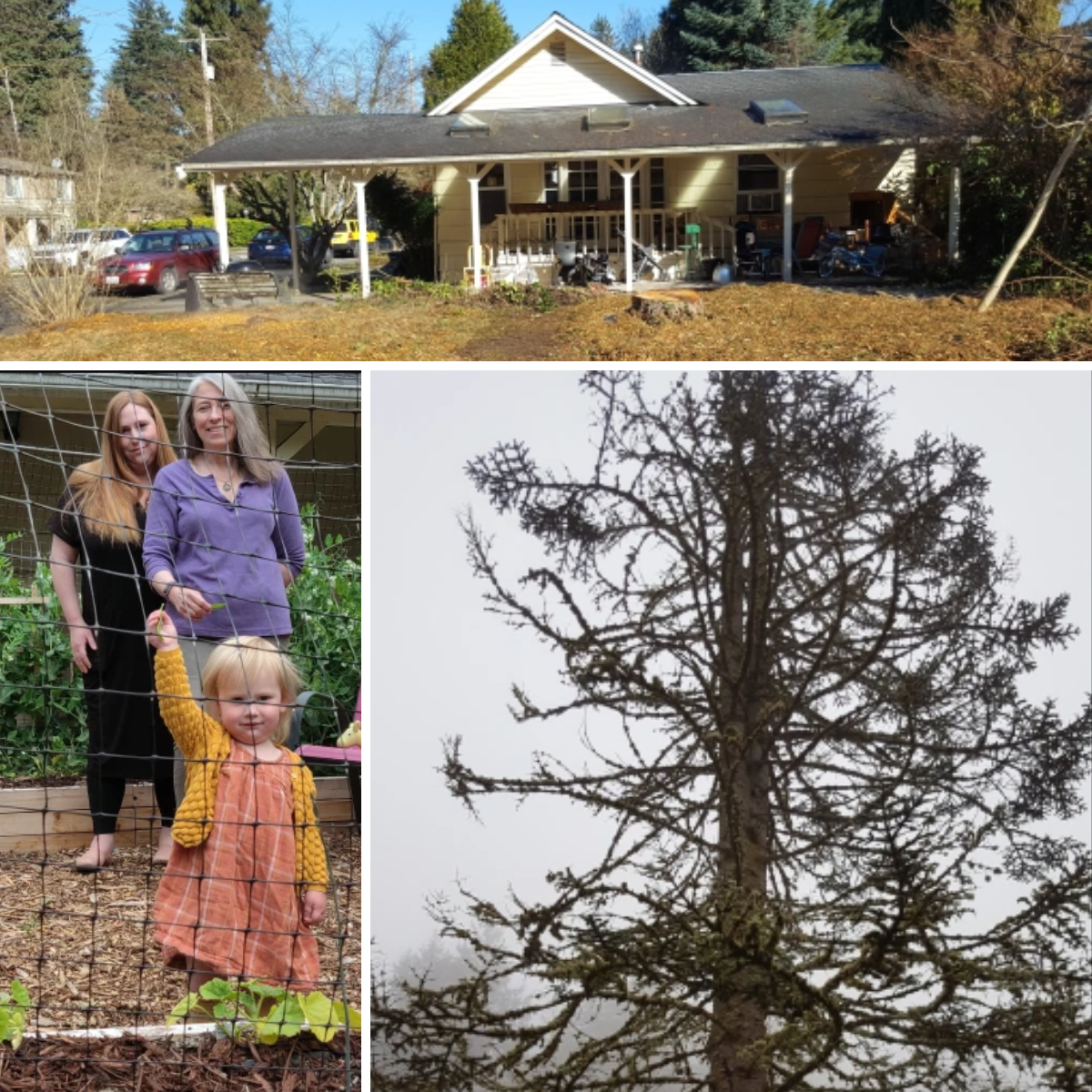
Late this past winter, we had to remove a big, old spruce tree from the south side of our little house here in the Issaquah Creek watershed. The City had replaced a sewer line adjacent to our house a few years earlier, and it had severed a major root of the tree. We knew it was only a matter of time for that old spruce. It finally gave up and down it came to protect our house from the risk of it falling on the roof.
Suddenly, we had a blank space. What to do with a part of the land we occupy now that the tree and related greenery was gone? A vision came to us: suddenly, we had a space on which the sun shined much of the day. Let’s create a new garden!
Ascension Year C: Cosmology, Kings, and Catastrophe
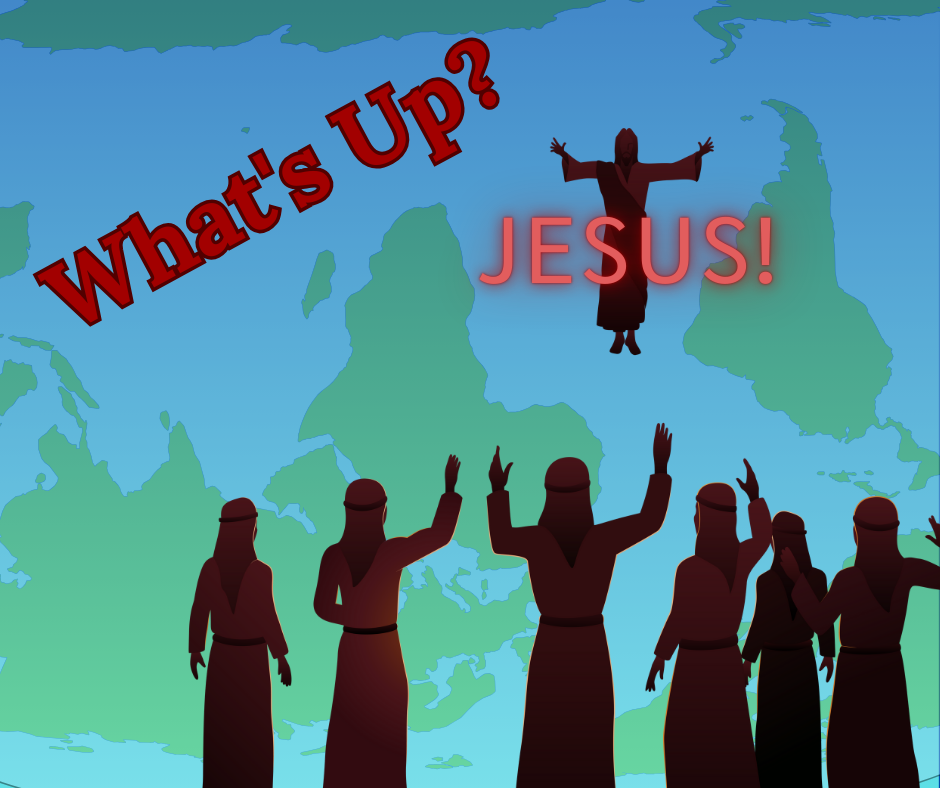
While this week’s Ascension readings are not as tied to the earth as usual, they certainly lift the discourse on cosmologies and how they impact our own perspectives and biases. From cosmological models to maps with the south on top, our perspectives are influenced every day and Ascension provides space to wonder creatively about who is really on top. The readings also play a lot with kingly imagery and understandings of power that provide a bold witness against many of the abuses of power we experience today. And, as is always present when reading texts set in a land beset by violence and genocide, this Sunday, especially, our contexts call for care and attention to the pain and violence continuing in Palestine.
The River of Water of Life: Easter 6C
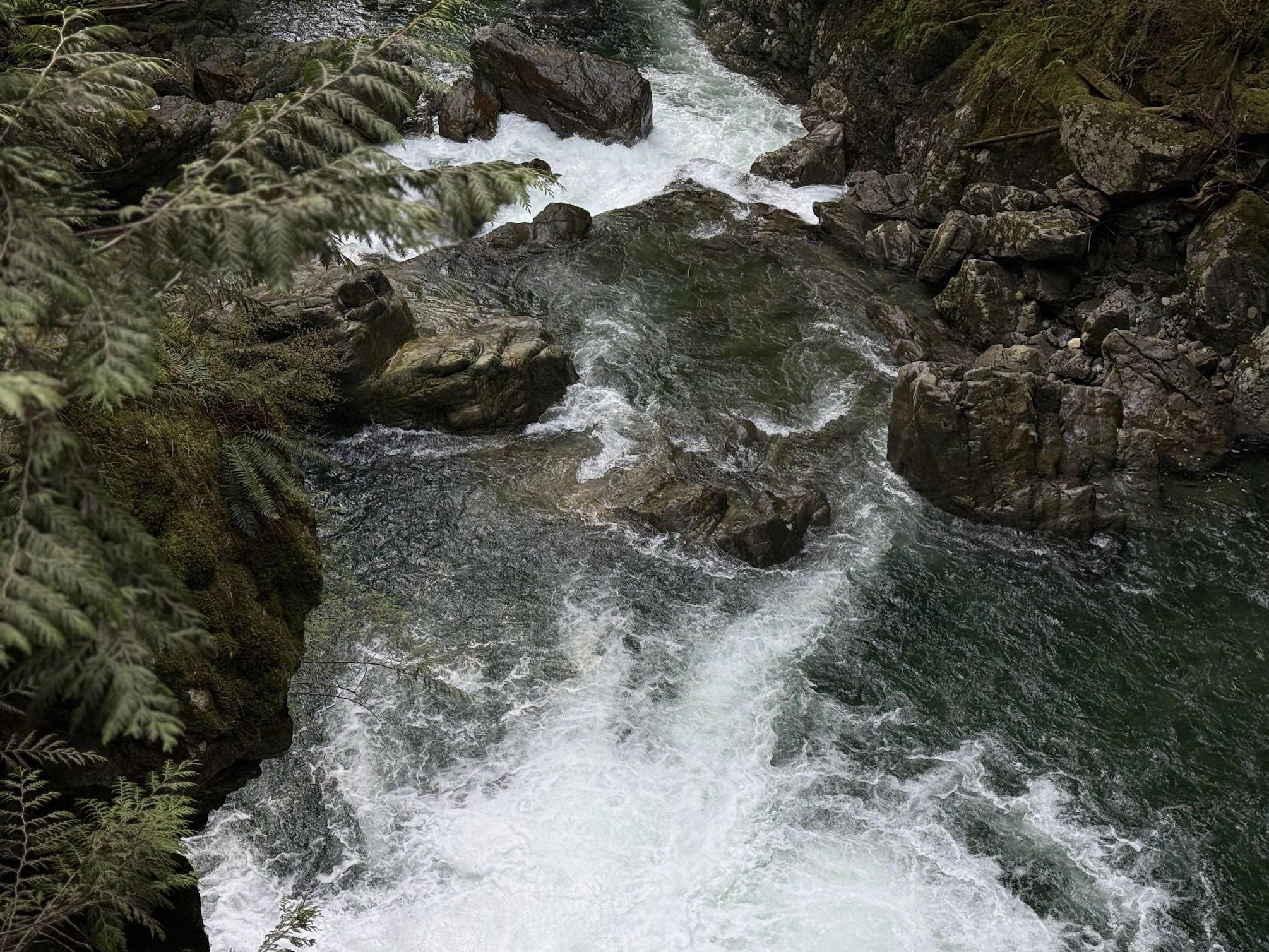
It is without a doubt that water is taken for granted. Yet, in the readings below we can see it holds a core message and presence. Just look at the Anglican Dominical Scarcements of Baptism and Eucharist. The quote “Water is the soul of the earth” is usually credited to British Poet W.H. Auden and it clearly indicates the value of water. I would expand on it with the idea of water being the soul of our faith. Water is in our bodies and in every part of our lives. Throughout this week’s readings there are common themes that appear. Among them are river, water, gate, light, and life are prominent. These themes reveal a movement of water and the significance of connection, complexity, beauty and belonging. So how does it connect to our readings for this Sunday?
Trees, a Gift for All or Entitlement for Some?: Easter 5C
And I saw the holy city, the new Jerusalem, coming down out of heaven from God, prepared as a bride adorned for her husband. And I heard a loud voice from the throne saying, “See, the home of God is among mortals.”
I imagine that a new Jerusalem, where God will dwell, will most definitely have tree-lined streets. I also imagine that God’s design for the present Jerusalem—for Earth’s cities in general—is that all should benefit from the Divine gift of trees.

Sheep, Gazelle and Rock: Easter 4C
On this Good Shepherd Sunday, our annual engagement with the repeated biblical assertion that both kingship and divine-human relations resemble sheep husbandry, the lectionary illuminates two key aspects of the emerging Wild Church Movement. Connected to both Watershed Discipleship and Contemplative Ecology, Wild Church is nothing more than Christians who intentionally worship, or seek to experience holiness, outside of buildings. In forests, deserts, city parks, beaches, urban vacant lots we reassert the strand of our tradition where wilderness is the place of divine encounter.
We are grateful to the sponsors who make Wild Lectionary possible:

This program is made possible through a Vital Worship Grant from the Calvin Institute of Christian Worship, Grand Rapids, Michigan, with funds provided by Lilly Endowment Inc.