
Imageries of Wheat and Weed: 8th Sunday After Pentecost, Year A
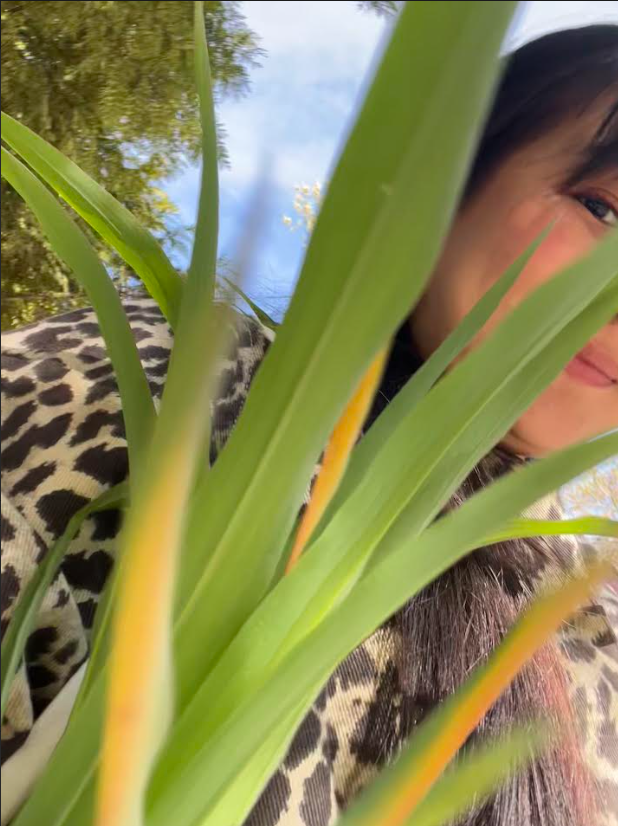
Andrea Tsugawa
Matthew shares with us not only the parable of the weed, but also its explanation. Yet the first thing that comes to my mind after reading this passage is a blurry memory of myself.
My mom has a green thumb. My whole family used to live from and with the Land, while I grew up in the city. Still, my mom always cultivated the garden. I would go outside to give her a hand, pulling lion’s mane flowers to show them to her.
“Those are weeds—throw them away,” she would say.
But to my eyes they were beautiful. Even now, when I think about weed, I think not only of labour, but also of beauty.
My brother Luis went even further. He would make little seashore replicas using Johnson grass in a big red laundry bucket we had growing up. I remember how that was the most beautiful and clever idea, something I admired deeply.
My partner works at xʷc̓ic̓əsəm and dreams of eventually having his own Indigenous garden project on his Nation. Yet he sometimes complains about the weeds and the buttercups fighting hard with the crops. Once I asked him what he feels about weed. He said:
“You feel everything in that moment. I feel the sweat, the heart, the soreness in my body, but it also gives me clarity. I become more present. It’s refreshing when I dislodge blackberry vines and see the root.”
Which are your memories with weed on the Land?
What stories emerge when you think of tending, pulling, or living alongside what grows where it wasn’t planted?
Commentary
-
24
Quechua:
Jesusmi huk rikchanachiytawan nirqa: —Diospa munaychakusqa rikchakun chakranpi allin muhu tarpuqmanmi.
English:
Jesus shared one teaching, saying:
—The manifestation of the love of God—the loving kingdom of God—can be recognized as the Land that has been planted with the good seed.
Comment:
Munaychakusqa rikchakun can be understood both as the loving kingdom of God and the manifestation of God’s love. This reminds us that the Kingdom is not merely a place, but a relational manifestation emerging from divine love.
That spiritual, eternal kingdom is said to be revealed in a living relational space, on the Land as a territory of care, where the seeds reflect the goodness planted by us each time.
25
Quechua:
Ichaqa puñuchkaptinkum trigo tarpusqanman enemigon chaqchuykurqa cebadillata hinaspam pasakurqa.
English:
But while everyone was sleeping, the enemy came, scattered darnel among the wheat, and left.
Comment:
Sleeping evokes vulnerability, a deep surrender of our bodies to stillness in the dark.
Although “enemy” is mentioned, there is no specific identification—representing invisible forces working within our blind spots.
Historically, sowing weed was an act of economic violence. Wheat and darnel look similar, and only when their heads grow can they be clearly distinguished.
26
Quechua:
Trigo wiñaramuspan ruruyta qallariptinmi cebadillapas rikurirurqa.
English:
When the wheat began to sprout and bear fruit, the darnel appeared as well.
Comment:
When good and harmful things are seeded closely and grow together, clarity requires time. Time requires patience. Patience requires love. Only the fruit of our loving patience allows us to see the results.
27
Quechua:
Hinaptinmi runakuna patronninman willamurqaku: —Señorllayku, chakrapiqariki tarpuchirqanki allin muhutam ¿maymantamá wiñaramun kay cebadillaqa? —nispa.
English:
The owner’s servants came to him and said:
–“Sir, didn’t you plant the good seed in your field? Where does this darnel come from?”
Comment:
This is one of the central theological questions: If you planted something good, where is evil coming from? Why does it appear?
28
Quechua:
Chaymi payñataq nirqa: —Enemigoymi kaytaqa rurarun —nispa.
Hinaptinmi runankunañataq tapurqaku: —¿Munankichu cebadilla qoraramunaykuta? —nispa.
English:
He replied, “An enemy has done this.”
The servants asked him, “Do you want us to pull the darnel up?”
Comment:
This is the recognition of damage—not caused by the seed or the sower, but by an external source.
29
Quechua:
Chaymi payñataq nirqa: —Ama, yanqañataqmi trigontinta chutaramuwaqchik.
English:
He answered, “No, because you may uproot the wheat along with it.”
Comment:
A revelation: acting with trepidation may compromise discernment and distort our outcomes.
30
Quechua:
Kuskayá wiñachun cosechakama, chaypiñam llamkaqkunata kamachisaq cebadillata puntata ruturuspa watasqata ramillan-ramillan kañanankupaq hinaspa trigotañataq taqeyman waqaychanankupaq.
English:
Let both grow together until the harvest. At that time I will tell the harvesters: First collect the weeds and tie them in bundles to be burned; then gather the wheat and bring it into my barn.
Comment:
A piece of advice: Take what is growing well. Focusing on the harmful too early generates more damage. Patience is part of the Kingdom, and not everything can be solved immediately.
-
36
Quechua:
Runakunata aviaruspanmi Jesus wasiman yaykurqa, hinaptinmi discipulonkuna payman asuykuspa nirqaku:
—Entiendeykachiwaykuyá chakrapi wiñaruq cebadillawan rikchanachisqaykita —nispa.
English:
When the people had left, Jesus went into the house. Then his disciples approached him and said:
“Explain to us the parable of the darnel growing in the field.”
Comment:
This verse reveals that parables require community interpretation. The disciples do not assume understanding; they seek clarity together.
This models a spirituality where wisdom emerges through asking, listening, and relational inquiry, not solitary certainty.
37
Quechua:
Chaymi payñataq nirqa:
—Chay allin muhu tarpuqqa Diosmanta Hamuq Runam.
English:
He answered:
“The one who sows the good seed is the Human One who comes from God.”
Comment:
The title “Human One” reminds us that God's work unfolds within the human world. The good seed is sown by the Human One into the field of creation, revealing that God's reign does not remain distant from human life but takes root within it.
Likewise, the good seed reminds us that the loving Kingdom of God does not begin with human merit, achievement, or moral perfection. It begins with God's own love and initiative. Humanity does not create the Kingdom; rather, the Human One plants its seeds within the world, inviting people to grow into the life of God's loving reign.
38
Quechua:
Chakraqa kay pacham, allin muhuñataqmi Diospa munaychakusqanpaq kaqkuna, cebadillañataqmi mana allinpaq kaqkuna.
English:
“The field is this world. The good seeds are those who belong to the loving manifestation of God, and the darnel are those who belong to what is not good.”
Comment:
The distinction made here is not simply between "good" and "evil" in an abstract moral sense. Rather, it is between actions that are life-giving and those that are harmful; between what emerges from the divine and fosters harmony within this space and time, and what emerges from distortion. The criterion is not merely outward morality but whether something participates in God's loving reign and bears its fruit.
The similarities between the darnel and the wheat underscore the subtle nature of distortion. The greatest danger is not what is obviously harmful, but what closely resembles the fruits of God's loving reign while lacking its root in love. Such distortions reveal the hidden blind spots that can shape our perceptions, relationships, and communities without our immediate awareness. Like the darnel growing among the wheat, they often remain unnoticed until their fruits become visible.
39
Quechua:
Chay cebadilla tarpuq enemigoqa diablom, cosechaqa kay pachapa puchukayninmi, cosechaqkunañataqmi angelkuna.
English:
“The enemy who sows the darnel is the devil. The harvest is the end of this age, and the harvesters are the angels.”
Comment:
Naming "the devil" here does not necessarily literalize evil; rather, it locates the source of distortion and harm as external to God's creative intention. Harm is acknowledged as a real component of the human condition, yet it is not presented as an inherent quality of creation itself. Instead, it represents a force of distortion that grows alongside what is life-giving, often remaining difficult to distinguish until its fruits become apparent.
Likewise, the harvest symbolizes not primarily destruction but revelation. It is the moment when what has grown under the sight of the Great Mystery is fully disclosed and its true nature can no longer be concealed.
The harvest reveals the fruits of both wheat and darnel, exposing not only what has participated in God's loving reign and what has emerged from distortion, but also whether we have remained rooted in and nurtured the good entrusted to us. It reveals whether we have continued to cultivate what is life-giving or allowed distortion to shape our lives and communities.
40
Quechua:
Paykunapas kanqa cebadillata huñuspa ninapi kañasqanku hinam kay pachapa puchukayninpi.
English:
“Just as the darnel is gathered and burned in the fire, so it will be at the end of the age.”
Comment:
Fire itself has the capacity of transformation. Of affecting the matter on it’s shape and transforming it into something else. As so, the fire must not be understood as punishment of people, but a transformation of what harms.
On the other hand, distortions require transformation rather than mere rejection. Because distortions often contain a fragment of truth that has been twisted or misplaced, they invite discernment instead of simple condemnation. What is true can be retained, while what has become distorted is purified and reoriented toward life.
In this sense, the burning of the darnel symbolizes not the condemnation of persons but the purification of distortion. Fire becomes an image of unveiling and refinement, consuming the veils that obscure our vision and preventing what is life-giving from flourishing. The judgment of the harvest is therefore not an invitation to condemn one another, but to allow the distortions that cloud our perception to be exposed, purified, and transformed in the light of God's loving reign
41
Quechua:
Diosmanta Hamuq Runam angelniykunata kachamusaq munaychakusqaymanta llapa pantachikuqkunatawan mana allin ruraqkunata huñuchispa rupachkaq hornoman wischuchinaypaq.
English:
“The Human One will send his angels, and they will gather out of his loving manifestation all who cause stumbling and all who do what is harmful, throwing them into the blazing furnace.”
Comment:
The focus is on removing harmful influence, not removing people. The angels gather “all that causes stumbling”—structures, actions, distortions that fracture community.
This is a vision of healing, not of exclusion.
42
Quechua:
Chaypim waqayllawanña kirunkutapas kirichichichinqaku.
English:
“There, there will be weeping and gnashing of teeth.”
Comment:
This phrase expresses the pain of confronting truth rather than the image of eternal torment. Truth can be painful because it unveils the ways we have participated in or been wounded by distortion. Yet its purpose is not to condemn but to restore, for truth ultimately honors and serves the way of love.
When we see clearly and embrace the truth, we may grieve both the harm we have caused and the harm we have endured. Such grief is not an invitation to self-hatred or punishment, but to honest reckoning. It is through this reckoning that we are invited to reconnect with our own hearts, with one another, and with the heart of God. In this way, the sorrow of revelation becomes the beginning of healing, allowing distortion to give way to a more faithful participation in God's loving reign.
43
Quechua:
Mana huchallikuqkunam ichaqa Dios Taytankupa munaychakusqanpi inti hina kancharinqaku.
Uyariwaqniykunaqa kasukuychikyá.
English:
“But those without wrongdoing will shine like the sun in the loving manifestation of their Father.
Whoever has ears, listen.”
Comment:
The final image is one of radiance: those aligned with divine love shine like the sun. This is not a reward bestowed from outside but the natural expression of a life deeply rooted in love. As distortion is unveiled and transformed, the light that has always been present is free to shine.
As my partner reminded us at the beginning, pulling weeds can bring clarity, embodiment, and presence. In this sense, there is even beauty in the weeds. They become teachers, revealing where our attention is needed, inviting patience, discernment, and care. Within the Great Mystery, even distortion can become part of our learning—not because harm is good, but because, when faced with honesty and love, it can become the very place where transformation begins.
Teaching and preaching ideas
Before we began, I invited you to recall any memories or experiences you associate with weeds and with the land. I did so because I believe we all carry images of "weeds" in our minds and bodies. These embodied memories and assumptions inevitably shape how we understand both the word weed and the parable itself.
By sharing the interpretation found in my Ayacucho Quechua Bible, my intention is not simply to offer another perspective from my own tradition. Rather, it is to invite us to notice the images we already hold and to discover how they might be transformed, deepened, or expanded through encounter with another way of seeing. Interpretation becomes a meeting place, where our inherited understandings are not erased but opened to new possibilities through dialogue, relationship, and mutual understanding.
Through the individual commentary on each verse, we have been exploring several interesting preaching possibilities. Which of these ideas resonates most deeply with your own relationship to wheat and weed? Which one challenges your existing images of them while also expanding your understanding? Which of these stories might illuminate something new for the congregation?
Relational Kingdom: The kingdom of love manifesting on Earth
The parable opens with a vision of the Kingdom not as a distant realm but as a loving manifestation rooted in the Land. God’s love becomes visible in the relationships we cultivate—between people, between communities, and between humans and the Earth itself. The good seed is not an abstract symbol; it is the reminder that divine love is planted in real soil, in real time, in the territory we inhabit. The Kingdom grows wherever care, tenderness, and relational integrity take root.
Invisible forces at work
The enemy in the parable is unnamed, appearing in the night when everyone is asleep. This anonymity teaches us that harm often comes from invisible forces—systemic pressures, inherited wounds, internal fears, or external disruptions we cannot fully see.
The parable does not invite paranoia; it invites awareness. Not all harm is intentional, but all harm has impact. Naming the presence of unseen forces helps us approach life with humility and compassion, recognizing that we do not always control what grows among us.
Which could be invisible forces that are constantly distorting our discernment?
Ambiguity, Clarity and Discernment
Wheat and darnel look nearly identical until maturity. This agricultural truth becomes a spiritual truth: clarity takes time. We cannot always distinguish what is life‑giving from what is harmful in the early stages.
Discernment is not immediate; it is a slow unveiling that requires patience, observation, and trust. The parable teaches us to resist premature judgment and to honour the ambiguity that accompanies growth. Clarity emerges as fruit appears—never before.
How do we navigate discernment through time?
Patience as a love practice
“Let them grow together until the harvest.” This instruction is not passive; it is profoundly active. Patience becomes a practice of love, a way of protecting what is fragile and still forming. Acting too quickly may uproot what is good. Patience is not avoidance—it is the wisdom to wait until truth reveals itself. In a world that demands immediate solutions, Jesus teaches us that some healing requires seasons, not seconds.
How do we nourish a kind of patience that is rooted in love rather than in pleasing?
The pain and rewards of confronting truth
“Weeping and gnashing of teeth” is not a threat of eternal torment but a description of the emotional weight of seeing truth clearly. Confronting what has harmed us—or what we have participated in—can be painful. The parable acknowledges this grief honestly. Transformation often begins with discomfort, with the ache of recognition. Yet this pain is not the end of the story; it is the threshold to clarity, healing, and renewed life.
In Matthew, the expression “weeping and gnashing of teeth” functions as a form of eschatological pain—a moment of intense emotional and spiritual confrontation when truth is revealed. This pain is not punitive but revelatory, marking the transition between hidden distortion and visible clarity.
Bibliography
Sociedad Bíblica Peruana. Diospa Palabra: Biblia en Quechua Ayacucho-Chanka (QUEAYA87). Lima: Sociedad Bíblica Peruana, 1987.
Author Bio
Andrea Tsugawa (she/her) was born and raised in Peru in a Japanese–Chanka mestizo family, and she carries with her a deep sense of cultural roots and resilience. Guided by gratitude for the Land, she hopes to always advocate for its care and protection—especially for this beautiful territory she now calls home. She is currently pursuing theological studies, seeking to weave faith, heritage, and compassion into her work and calling.
Image Description
Image shows a close up of long green leaves, with a person behind them, obscured by the angle and the plantlife. The person has long dark hair and is wearing an animal print top.