
Epiphany of the Lord, Epiphany for All Creation: Seeing Jesus in the More-Than-Human World
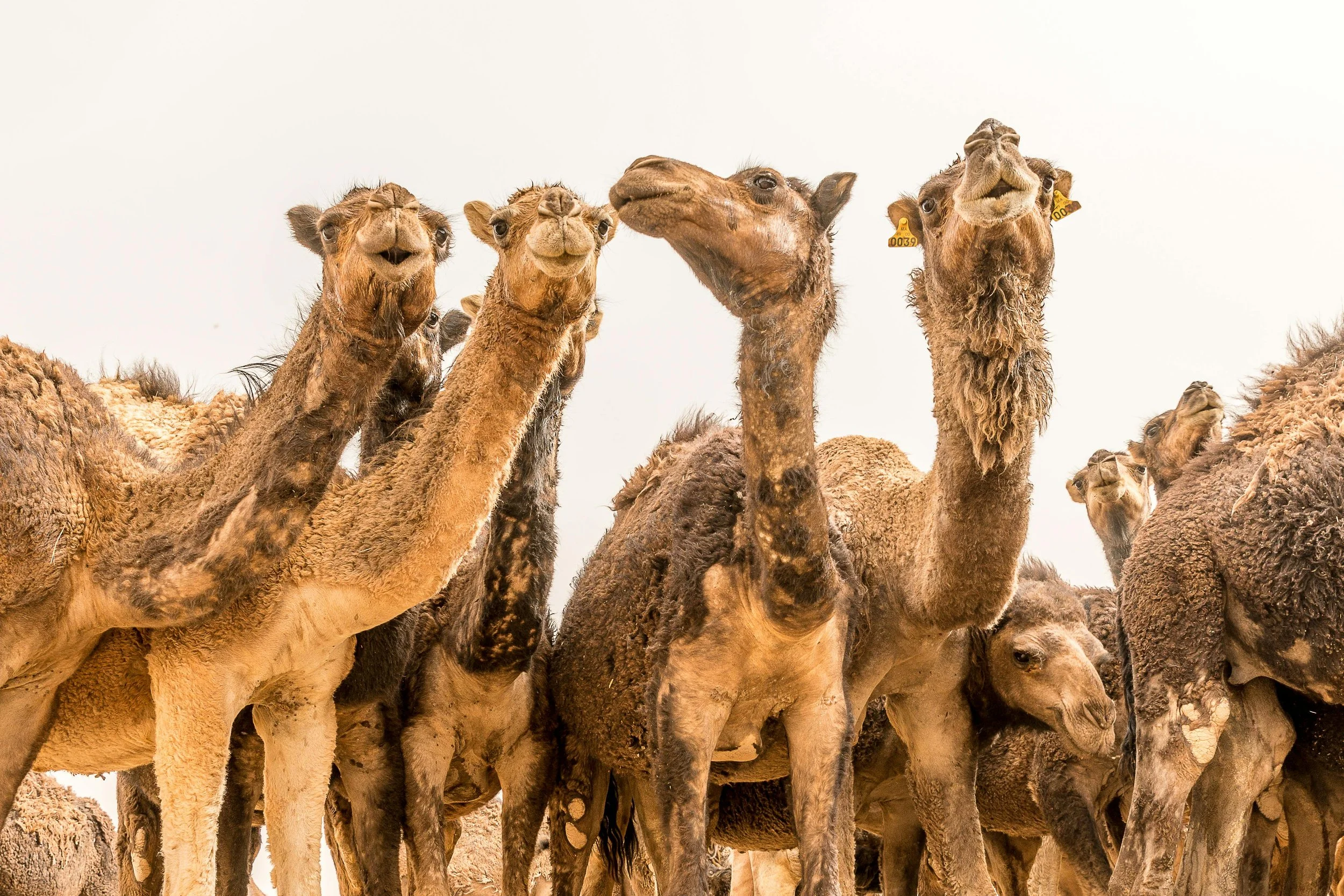
Sébastien Doane
An epiphany is a moment when you suddenly feel that you understand — or suddenly become conscious of — something deeply important. The feast of Epiphany is about recognizing God’s manifestation; it’s that “ah ha!” moment.
Traditionally, the birth of Jesus has been understood in an intensely human-centered way. As the Nicene Creed states, “For us men and for our salvation, he came down from heaven.” But as the bad wise-men joke reminds us… Wait! maybe there is myrrh 😉
But what if Jesus’ birth was not meant only for humans? What if other creatures, other members of the created world, are also drawn into this great event? And what if being human is always already a state of being woven into the whole community of creation — a community yearning not only for salvation, but for justice and flourishing for every creature?
Commentary
-
Isaiah 60 is a poetic, prophetic chapter announcing the restoration of Jerusalem after its destruction. It is part of a section likely addressed to a community returning from exile and struggling to rebuild. In verse 4, we witness sons and daughters coming back to the city.
Verses 1–3 use the image of light shining through darkness to describe God’s glory and its radiance on the city. And as we know, the sun’s light is not only a human necessity but the sustaining force for all life on earth, a reminder that divine illumination embraces every creature.
Verses 3–6 show the renewed Jerusalem becoming a center for nations making pilgrimage. Kings and international wealth (gold and incense) flow toward Jerusalem. And notably, camels, young camels, and groups of travelers from Arabia also make the journey — a small but beautiful sign that the movement toward restoration includes human communities and the wider community of creatures that travel with them.
Isaiah 60 is thus about a new dawn for Jerusalem, the homecoming of exiles, international recognition and cooperation, material restoration, peace, and God’s everlasting, illuminating presence — a presence that ultimately seeks justice, renewal, and shared flourishing across all creation.
-
Psalm 72 is a royal prayer attributed to Solomon about the kind of justice required to lead the people. Interestingly, to speak of this justice, the psalm evokes diverse natural elements.
Verse 3 brings mountains to mind as spaces of justice and prosperity, since Israel’s agrarian life was rooted in the hills. Yet verse 4 clarifies that this well-being does not arise from exploiting fellow humans. We can even extend this insight: exploiting land or animals also contradicts the vision of justice celebrated in this psalm, where right relationship is meant to include the whole community of creation.
The sun and moon, with their greater-than-human timeframes, are invoked to illustrate the enduring effects of the just king’s reign — a reign meant to sustain life not only for people but for every creature living under those same celestial rhythms.
Verses 6 and 7 naturally associate a thriving, flourishing earth community with rain pouring down on the soil. Here, justice is pictured as ecological renewal — the kind that nourishes plants, animals, and humans alike.
The kings coming from Tarshish, Sheba, and Saba in verse 10, and bringing gold offerings in verse 15, are often linked with Matthew 2’s magi.
But I want to highlight the following verse, not read in the lectionary, which underscores that a king’s justice is never limited to humans; it encompasses land, grain, fruit, people, and the grass community woven together in one living system:
“May there be abundance of grain in the land;
may it wave on the tops of the mountains;
may its fruit be like Lebanon;
and may people blossom in the cities
like the grass of the field.” (Ps 72:16) -
In this passage, the divine plan concerning Christ — once kept a mystery for generations and now revealed through saints and apostles — presents God as the one “who created all things” (v. 9). To speak of the effects of Christ, Ephesians 3 points to something far beyond a human-centered history. Indeed, verse 10 evokes the figures of Rulers and Authorities of Heaven, who are depicted as coming to know God’s wisdom and eternal project.
Who are these figures? They could refer to pre-Christian polytheistic divinities, portrayed as recognizing God’s action in Jesus. They could also be angels or members of the divine council. But they might just as well represent celestial bodies — stars, the moon, and the sun — highlighting that God’s plan encompasses the entire cosmos.
Ephesians portrays Christ not as merely a human affair, but as a cosmic, universe-encompassing event, a divine work whose justice and reconciliation extend to all creation, human and more-than-human alike. See a similar list of cosmic and spiritual forces in Ephesians 6:12, reminding us that Christ’s impact is not limited to humanity, but flows throughout the whole created order.
-
Non-human animals are noticeably absent from Jesus’ infancy narrative in Matthew. Tradition has often pictured the magi traveling to Jerusalem on camels, yet the text itself says nothing of this.
Verse 6 does reference tending a flock, but metaphorically, it signals that Jesus is the leader — the anticipated shepherd of the people in prophetic literature. Here, the “domesticated animals” are humans, under the guidance of a God-sent shepherd.
Yet another important nonhuman character appears: the star. Scholars have proposed that it could be a comet, a supernova, a particular constellation, or another celestial body. In antiquity, cosmic phenomena were often read as signals of significant human events; for example, Augustus interpreted a shooting star marking Julius Caesar’s death as also signaling his own political ascendancy.
In Matthew’s narrative, the star is unlike any other. It directs the magi first to Jerusalem (v. 2) and later guides them to a specific house. Moreover, it carries profound affective weight: “When they saw the star, they were overwhelmed with joy” (v. 10). It is not the sight of Jesus but the star itself that evokes this intense delight — a reminder that God’s cosmic signs, part of creation, participate in divine revelation.
Verse 11 presents three natural elements as gifts: gold, frankincense, and myrrh. These have often been interpreted symbolically — gold for royalty, frankincense for divinity, and myrrh for death. Yet they are also earthly treasures: gold is mined, frankincense and myrrh are vegetal products valued for their fragrance. These natural gifts, carefully gathered and offered, underscore that the magi’s homage honors not only a human king but also the material and living creation itself.
Teaching and Preaching Ideas
Where Are the Animals?
What animals were present at Jesus’ birth — camels, sheep, donkeys, oxen? Believe it or not, Matthew’s story does not mention any animals. Yet readers have long imagined them in the text. One of the earliest depictions of baby Jesus appears on a stone coffin crafted around 385, now in the Basilica of Sant’Ambrogio in Milan, showing an ox and an ass on either side of him.
The apocryphal Pseudo-Matthew, written around the 7th century, recounts Jesus’ birth this way: “And an ox and an ass bent their knees and worshiped him. Then was fulfilled what was spoken by Isaiah the prophet, who said, ‘The ox has recognized its owner and the ass the manger of its lord.’” The idea behind this tradition is that, in (the Greek version of) Isaiah, animals naturally recognize the humans who care for them — in contrast with humans, who often fail to recognize the Lord’s presence. Since Jesus is Emmanuel, “God-with-us,” animals recognize him as Lord… and so should we.
Camels are another late addition. The Magi are mysterious figures: we do not know their names, how many there were, or precisely where they came from. Yet the gifts they bring attest to great wealth and connections with Arabia, so it is natural to imagine them riding camels toward Bethlehem.
We could argue against adding animals to our understanding of Jesus’ birth, since they are not mentioned in the text. But this stance does not do justice to what we know about antiquity, nor to the readers’ natural impulse to connect Jesus with the rest of creation.
Biblical worlds were agrarian. Humans did not live without regular contact with animals: donkeys and camels transported goods and people, oxen plowed fields, and herds of sheep and goats were a daily presence. Even if the Gospels do not explicitly mention them, these animals were always there.
We can also recognize a broader truth: biblical texts often write “not counting women and children.” Similarly, animals, birds in the trees, domestic animals around houses, and even the tiniest creatures — microbes and other unseen life — were part of the story, yet left unmentioned. To envision a full, justice-oriented picture of Jesus’ birth, we must include all these living beings, who share in the divine presence and participate in God’s creation.
Jesus Was an Animal!
Biologically, humans are animals. There is no feature that separates us fundamentally from other animals. So, if Jesus was fully human, he was also an animal.
The first time I discussed this with a student from a culture where animals are central to human survival — and where “animalizing” someone can be a way to denigrate them — she was understandably scandalized. I was not trying to insult Jesus or suggest he was unworthy of being part of society. Rather, thinking of Jesus — and ourselves — as an animal is a way to extend our ethical and theological concern to all creatures. One of the roots of our ecological crisis is anthropocentrism: imagining a world that exists only for humans. Christian theology has often fallen into this trap. The wild lectionary is one response to push back against this dynamic, helping us creatively see how our lives are intertwined with all other creatures.
As all Homo sapiens, Jesus had a human body: he was a mammal, a primate… he was an animal.
Jesus, as More-Than-Human
But Jesus was also more than human. In Christian faith, he is divine. Yet he was also more-than-human in material, bodily ways. Consider this: more than half of the cells in a human body are not human. They are bacteria, fungi, viruses, and archaea. To live well, we depend on millions of these tiny creatures on our skin, in our guts, and in our microbiome. If Jesus was human, if he was God’s Word made flesh, his body was also constituted by countless nonhuman lives.
Like all mammal babies, Jesus inherited microbes and bacteria from his mother via the placenta and breastfeeding. His body was colonized by millions of tiny creatures — front-row attendees at his birth, in a sense. Thinking about Jesus’ body as a living ecosystem is part of “deep Christology” or “deep incarnation,” a discipline that explores the material conditions of creaturely existence and highlights the shared fate of all life forms.
If we attend to Jesus as more-than-human life, we must attend to all more-than-human life. Jesus did not merely live alongside “nature”; his body was composed of earthly materials — from water to iron — and teeming with nonhuman life.
Returning to my student’s reaction: she worried that calling Jesus an animal was a form of insult. And indeed, animalizing someone can be dangerous. Yet reflecting on Jesus’ life, especially around the feast of Epiphany, reminds us that this story already points toward the cross. Jesus will be crucified, likened in the gospels to lambs slaughtered at the same time. In this way, Jesus shares in the fate of animals.
So instead of rejecting the idea that we are animals — or that Jesus was — perhaps we should reconsider how we treat other creatures, standing in solidarity with them, even if it means speaking truth to power.
Rain, Grass, and Flourishing Righteousness
Psalm 72, Isaiah 60, and Ephesians 3 each contribute important insights for celebrating the Epiphany with creation. These texts link God’s vision of justice with more-than-human Earth communities, showing that human actions — good or bad — ripple through the entire world.
Before the radiant vision of Isaiah 60, the book describes Jerusalem/Zion as devastated by the Babylonian conquest, with wild animals and livestock roaming freely in its ruins (Isaiah 27:10–11; 32:14). Isaiah 60 reverses this imagery, portraying a restored, repopulated, luminous Jerusalem, where nations return and God’s glory dwells.
But what happened to the animals left behind during the exile, when humans were absent? The text does not say. Did the returning exiles from Babylonia clear Jerusalem of its animal inhabitants? Perhaps. To fill in these gaps, it is important to remember that ancient agrarian culture was profoundly different from modern industrial agriculture. Living with animals was the norm; they were not pets, but integral to the household — as the root of “domesticated” (domos, household) indicates. We can imagine feral sheep being brought back into the fold, while wild donkeys may have preferred quieter areas with less human activity. From the animals’ point of view, Jerusalem’s restoration may have meant the loss of what had become a natural habitat.
Biblical communities had no concept of modern overpopulation or industrial land modification. The key is to read our texts attentively: human flourishing in God’s sacred city is certainly good, but we are called to remain conscious of the effects of human growth on nonhuman creation. Living in biblical times, even in a city like Jerusalem, meant being attuned to other animals and intimately connected to the land.
Psalm 72 helps us recognize that justice exceeds human concerns. In modern terms, it speaks of ecojustice, where humans who do not exploit other members of creation can hope for a flourishing Earth community that includes them. Human flourishing in Jerusalem was never meant to be exclusively human — it was a space where humans and animals lived together. Justice encompasses the land, grain, fruit, people, and grass community:
“May there be abundance of grain in the land;
may it wave on the tops of the mountains;
may its fruit be like Lebanon;
and may people blossom in the cities
like the grass of the field.” (Ps 72:16)
Ephesians reveals that Christ is not merely a human affair, but a cosmic, universe-encompassing event. The divine plan exceeds human understanding, yet is revealed in Christ. Speaking of God as the one who “created all things” invites us to worship and live with concern for all creation, not only for our human concerns.
Contributor bios
Sébastien Doane is author of Reading the Bible amid the Environmental Crisis: Interdisciplinary Insights to Ecological Hermeneutics, Lexington, 2024. He is cochair of the Society of Biblical Literature The Bible and Animal Studies unit. He also founded the Routledge book series The Bible and Ecology.
Image description
Herd of Camels in the desert by Mike van Schoonderwalt. Nine or more camels fill the frame from their knees to the top of their heads, facing the viewer. The camels are shades of brown and gold, the background is white, and the point of view is below the camels looking up.