Beholders of Faith: From Alien Tongues to Sacred Language - 17th Sunday After Pentecost
Andrea Tsugawa
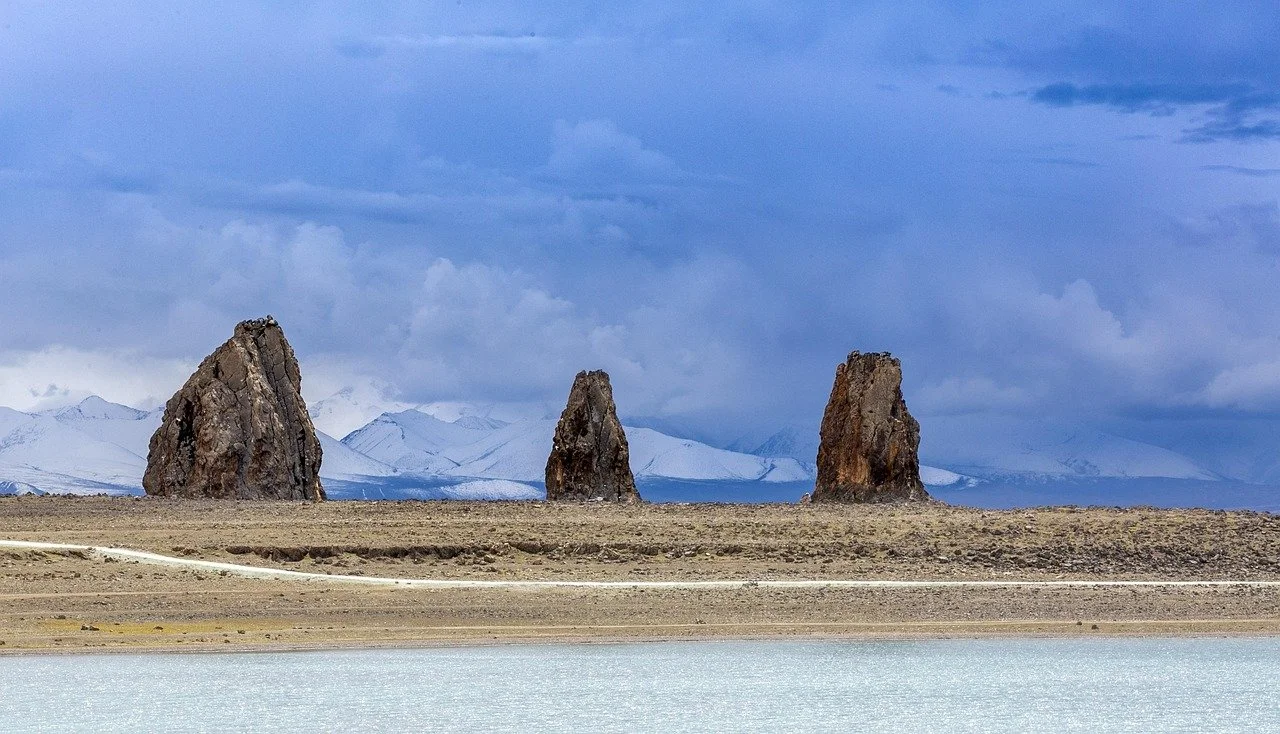
One of my all-time favorite films is Arrival. It’s a maybe-not-so-science-fiction story that begins when twelve mysterious, stone-like alien ships descend upon Earth. Without giving too much away, the protagonist—a linguist—is tasked with decoding their language and uncovering their purpose. But the film is far more than a tale of extraterrestrial contact. It’s a profound journey into the Great Mystery, where one person’s understanding of time, space, and trust is completely transformed.
“If you immerse yourself in a foreign language, you can actually rewire your brain,” one character says—and I truly believe that. Arrival doesn’t just explore communication; it shows how language can reshape reality itself.
But what does this movie have to do with what the Creator says in Luke 17:5, 10? I came to realize: it gave me a clue for better understanding. The gift of being able to deconstruct your mind and notions as a human—to see the world through different eyes—is a path that can lead us toward a more respectful and harmonious existence.
I was born and raised in an intercultural, interfaith, and plurilingual household and community. An environment that sometimes made me feel like I didn’t quite fit anywhere, yet somehow belonged everywhere, just like an alien ship. Many teachings didn’t make sense until I entered theology school. But the 27 years I spent in that realm before moving to Canada taught me how deeply important language is to our being.
Around the year 2000, when Augustinian priests came to my Japanese-Peruvian school, we used to read the “Latin American Bible.” I couldn’t interpret or analyze it as I do now. I simply listened and memorized. Being one of only two Peruvian children among full-blood Japanese classmates, I began to notice subtle differences—especially through my indigenous traditions and rituals, which were deeply intertwined with the Land, or Pacha (Land, time here and now).
Instead of settling for “three languages are enough!” (which was, honestly, easier) I chose to honor my ancestors by learning Quechua. And marvelous things happened. I didn’t just rewire my mind—I rewired my way of feeling, of connecting with Creator and Creation.
The most profound gift of reconnecting with my native language was discovering a Quechua version of the Bible. A version I now slowly translate, one that helps me reconcile and feel every word the Creator has given us. For the first time, I feel Scripture speaking directly to my soul.
For years, I wondered: Why do Christians sing to a mustard seed? The reference never made sense to me—until I began unpacking layers of pain, inherited wounds, and the ways sacred language had been weaponized. I’m still learning, still healing. But with great effort, I’ve begun a personal practice: translating the passages I long to understand, the ones I want to feel in my own spirit.
Señortam apostolninkuna mañakurqaku: —Yanapaykuwayku astawan iñiyniyoq kanaykupaq —nispa. Hinaptinmi Señorñataq nirqa: —Mostazapa muhun hinallapas iñiynikichik kaptinqa niwaqchikmi kay purun higos sachata: “Sapikimanta pilakuspa lamar qochapiña sapichakuy” nispa hinaptinqa kasusunkichikmanmi.
The apostles, in togetherness, begged: —With all of your love, Lord, help us to become greater beholders of faith. And the Lord replied, rooted in the present moment: —If the faith you hold were even as small as a mustard seed, you could say to this wild fig tree: “Uproot yourself from your very roots and take root again in the open ocean.” And the tree would obey.
“With all of your love”—turns out to be the key. A sign that Jesus was not teaching to our minds, but to our hearts. Something I couldn’t see before, when biblical language was used over me, infused with guilt, suffering, and the notion that the All was corrupted. As if we would never be enough for Creator.
Through these words, the Lord gives us clues for our existence. We are beholders of faith—vessels who constantly choose how to increase or diminish our gifts, our trust, our material and spiritual abundance. Beholders of beauty, because only when we allow our souls to contemplate and witness Creation do we begin to understand what it means to have increased faith. A faith that connects our pulse and breath to the mustard seed. A faith so relational that even the fig tree would understand your command, because they know it comes from a place of understanding and love.
It is clear that we are stewards of the natural world—a world that does not need us, yet inspired us to develop communication systems, to learn, and to witness what faith can do when we surrender to it.
The Lord then adds:
Yapusqanmanta otaq animal michimusqanmanta sirvientekichik kutiramuptinqa ¿yaqachum niwaqchik: “Mesapi tiyaykuspa mikukuy” nispa? Manam, aswanqa niwaqchikqa: —Cenayta preparapamuway, servimuwaptiki mikuruptiy tomaruptiyñam qampas mikunki hinaspa tomanki —nispam. Tanteayniymantaqa kamachisqallan rurasqanmantaqa manam patronqa runantaqa agradecekunmanchu. Qamkunapas tukuykamachisusqaykichikta ruraruspayá niychik: —Mana imapaq valeqmi kanchik, deberllanchiktam rurarunchik —nispa.
When the one who has been taking care of your lands and giving directions to your herds returns, would you say: sit in my sacred table and eat the bread that binds us together? No. You would say: “Prepare my food with reverence, serve me first, and once I have eaten and drunk, you too may share the food that Mother Earth has given us.” Does the owner of the Land show reflexive gratitude to the servant for doing what was commanded? Likewise, when you have fulfilled all that the Creator has asked of you, say with humility: “We are no more than servants of the Great Order. What we did is what we were meant to do—as part of the sacred network of life.”
This passage’s connection to the Land is simply beautiful. It reminds us that tending to the soil and the herd—our daily relationships with nature—is worthy of reverence. That we are all part of the Great Order, which calls for humility, reciprocity, and attention to the small things. No being is above the other.
While reflecting on this, a new understanding sparked: If Creation belongs to the Creator, then perhaps we are the servants—those entrusted with tending the soil and guiding the herds in all their forms. Maybe “taking care of the earth” is the economic labor that sustains us, and “herding” is the human work we lead, the relationships we nurture, the communities we shape. If that’s true, I believe Jesus would welcome us to the table with reverence and gratitude only if we are truly aligned with what he commanded: to care for the sacred network of life, to honor the Great Order, and to stand humbly before the vast Mystery Creation it holds. And maybe, if we forgot how to behold the greatness of a tiny mustard seed within our hearts and actions, it will be our turn to wait until we are allowed to receive the fruits that Mother Earth has given us.
Unfortunately, not all humans on Earth have had a great relationship with Scripture. Some of us have felt like we’d never truly resonate with it—like we were trying to decode a language not meant for us. Personally, I’m still building my relationship with the Bible. And despite my willingness, some words still hurt my spirit. As if I wasn’t welcome at the table simply because I didn’t share someone else’s upbringing.
Nevertheless, maybe that’s where the alien movie comes in, to remind us that language can reshape reality, and that some words—when spoken with love—can bring us closer to the Creator. This unexpected bridge between a sci-fi film, our grasp of reality, and sacred language becomes an invitation: to try to always speak with kindness, to listen with reverence, and to make a more inclusive church, because at the end of the day, we never know who around us feels like an alien ship landing in our space. And if we’re not open to being transformed by their presence, we might miss the gifts they came to share.
Author Bio
Andrea Tsugawa (she/her) was born and raised in Peru in a Japanese–Chanka mestizo family, and she carries with her a deep sense of cultural roots and resilience. Guided by gratitude for the Land, she hopes to always advocate for its care and protection—especially for this beautiful territory she now calls home. She is currently pursuing theological studies, seeking to weave faith, heritage, and compassion into her work and calling.