
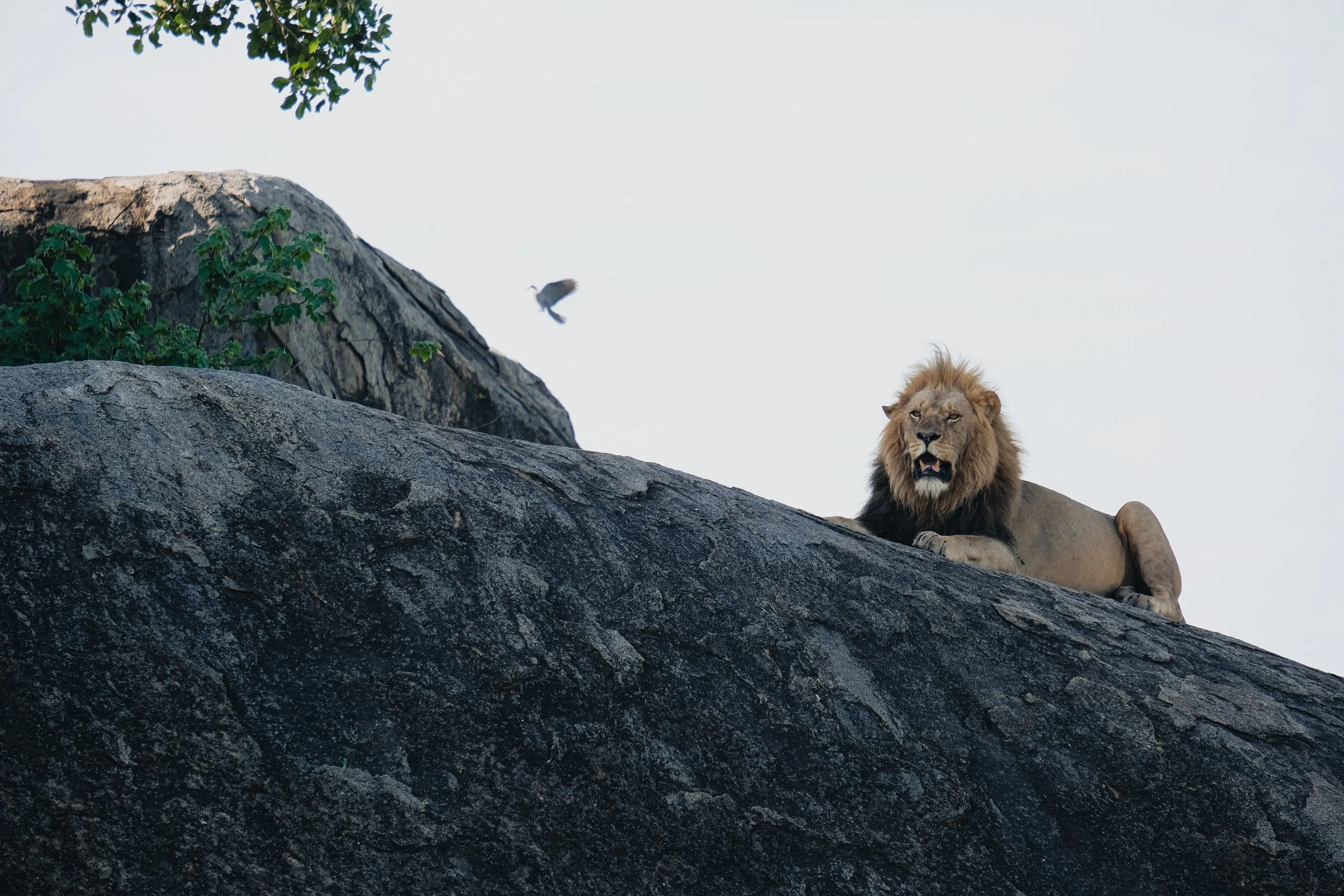
Roaring Lion, Trembling Bird: 8th Sunday After Pentecost Year C
Laurel Dykstra
In this season after Pentecost or “ordinary time,” the lections are not chosen by theme, instead the broader patterns of scripture are allowed to unfold. None of the passages this week are especially “creation-forward” and references to the more than human world are quite troubling. In Hosea, divine-human relations are compared to the relationship between predator and prey, as well as to intimacy and violence in human families.
The other readings all evidence significant unease with the reality of human dependence on the earth: juxtaposition of desert and city in Psalm 107, the equation of earth and sin in Colossians, and a farmer plotting to store up the land’s abundance in the Gospel of Luke. The verses following the Gospel lection (Luke 12:22-34) however offer a model for Kingdom Economics rooted in nature’s reciprocity and abundance. Whether the eco-preacher chooses to push back against troubling texts, celebrate nature’s economy of gift, or ask hard questions about what Christians do with money, there is a surprising amount of material to engage with.
Commentary
-
Background: In Hosea the more than human world is understood as active and engaged in the story of salvation but the prophetic concern for social and economic justice is told in an extended metaphor of sexual violence. In the oracles land is an active participant and covenant partner in the story of salvation. God and humans are compared to creatures and elements from the natural world. In Hosea 4 the impact of human transgression is a reversal of the sequence of creation in Genesis. At the same time the dominant metaphor of the prophet and his wife imagines religious fidelity and commitment to justice, as sexual fidelity within patriarchy, equates non-monogamy with sex commerce, assumes that sexual violence (reparative rape) is a husband’s prerogative and equates military violence and invasion with divine judgement.
Today’s lectionary passage from Hosea is a potent cocktail that mixes parental love and anger with political violence and nature imagery. These verses juxtapose intimacy and power, compassion and anger, adult and child, lion and bird, predator and prey.
Verses 2-3
Note the Hebrew uses they/them pronouns for the DivineVerses 3-4
These tender and physically intimate acts of care: teaching to walk, taking a child up in arms, healing, lifting to the cheek, bending down to feed, are usually associated with mothers and female caregivers.
Verse 11
Divine-human reconciliation in the wake of stayed violence on the part of the divine, is imagined as the pursuit of a roaring lion and the approach of shaking birds. The passage implies human and animal hunting or predation while observation of doves and pigeons suggests kin-bonding behavior between mates or parent and offspring.
-
Verses 4-7
Separation from God is imagined as wandering in a desert. The desert is a place of hunger and thirst where the city or inhabited town a place of fullness and satisfaction. This image contrasts with the exodus where the Hebrews find abundance in the wilderness and the prophetic mistrust of cities.
Verse 9
God’s mercy or steadfast love “fills the hungry with good things” but the Psalm lacks the condemnation of inequity and the social reversal found in Hannah’s song (1 Samuel 2) and the Magnificat (Luke 1:46-55) where the hungry are filled those who were full go hungry.If we take seriously Sylvia Keesmaat’s claim that the Magnificat is rooted in Mary’s walking the occupied hill country of Judea, this could suggest that the Psalm, while drawing on natural imagery, is less rooted in a perspective that sees the connections between land and economic justice.
-
“Set your minds on things that are above, not on things that are on earth”
“Put to death, therefore, whatever in you is earthly”The characterization of all kinds of immorality as earthly or of the earth can lead to a kind of extreme Christian dualism that argues: heaven is the sole dwelling place of God; our ultimate destiny is heaven; earth is meaningless and to be exploited.Description text goes here
-
Verse 13
The frame is a dispute over inheritance law which functions to control ownership of land and pass on class privilege between generations.Verse 15a
“Guard yourselves against every form of greed” Greed is here understood not as a moral category, but as a predatory force. Pleonexia is related to the Greek verbs pleonazō (“to have too much” or “grow too big,” see 2 Cor 8:15) and pleonekteō (“to take advantage of or defraud,” see 2 Cor 2:11, 7:2; 12:17f; I Thes 4:6). (Ched Myers)
Verse 16
This parable compares to two other unflattering parables of rich men (Luke 16:1-13 and 19-31) which bookend Jesus’ teaching on Mammon.
Note that the land or soil is the primary actor, the author of abundance.Verses 17-19
The farmer’s inner monologue is dominated by the first person singular and possessive (everything is I and my).
The farmer’s barns are contrasted immediately with the Raven’s lack of barns (v. 24) and intertextually with the supply cities of Pharoah and the prohibition on hoarding manna in Exodus.Verses 22-34
Although omitted from the lectionary, these verses are part of the same teaching unit. In contrast to the negative lesson of the hoarding famer, are two positive object lessons from the more than human world, the ravens and the flowers of the field, demonstrating divine abundance. Both sections conclude with parallel proverbs about treasure (12:21,34).
Teaching and Preaching Ideas
Images of God
The book of Hosea and today’s passage specifically include evocative and troubling images of God: one who cares for infants, who threatens military violence, who roars like a lion. When conversations about God-language are often focused on binary gender and parenting, these passages offer the opportunity to consider the diversity and function of the ways that we and our forebears imagine the divine. How do they mirror, disrupt and amplify the world around us.
Some possibilities for exploration include:
The use of they/them pronouns for the Divine in Hosea 11:2-3
God as tender and physically intimate caregiver of infants: teaching to walk, taking a child up in arms, healing, lifting to the cheek, bending down to feed, (Hosea 11:3-4). How do we understand a god who performs reproductive labour in a world where that work is gendered. Does/How does this shift our image of God? How when this tenderness and intimacy is contrasted with the threat of violence (a pattern of abusive behavior).
In Hosea the prophet threatens and enacts violence intimate partner violence while God threatens and enacts military violence and violence against the reproductive capacity of those who have wombs and breasts. Why do we want/need/create violent images of God? How do the creators’ and recipients’ own power in the world interact with those? How are military and intimate partner violence connected?
God, in anger at unfaithfulness is compared to large predators: lion, leopard, and a mother bear (5:14-15, 11:10, 13:7-8) that roar, stalk, tear apart and consume prey. How do we understand these images? How are they similar or different to images of human violence? Are we reading the natural world or “using animals to think with” -employing them as metaphors rather than autonomous beings? Does it change things to know that Asiatic Lion and Syrian Brown Bear are extirpated (regionally extinct) in Israel, and the Arabian Leopard is critically endangered?
There are two unexpected readings of the text that are possible if we root ourselves in the realities, ecological and social, behind the metaphors.
God self-identifies as one who cares tenderly for young children. The reality is that reproductive labour is often done by women, and in the West and North increasingly outsourced to women of the global South at the expense of their own children. What if imagining God this way caused us to listen to and act on the voices of maids, nannies, elder-care workers calling for safe work, just compensation and migrants rights.
In the second part of the reading predator and prey relationships are jumbled up with family violence. “They shall go after the LORD, who roars like a lion; when he roars, his children shall come trembling from the west. They shall come trembling like birds from Egypt and like doves from the land of Assyria,” (Hosea 11:10-11a) This passage seems to describe a divine human “reconciliation” that is rooted in fear of divine violence. But there are a couple of hints that flip the script a bit and allow for interpretation of autonomous human action with other motives. The first part of verse 10 could be read as human hunting -courageously pursuing a worthy foe.
And observation of the behavior of doves and pigeons shows juveniles tremble or shake their wings to beg food from adults and adults tremble their wings at one another prior to mating. Thus trembling is not about fear of predators, but something that birds do within their own conspecific relationships to cement bonds and elicit pleasure. What if we understood our relationships with the divine to be about courageous seeking or pursuit of nourishment and pleasure.
On Earth as it is in Heaven
Readings from the psalm, epistle, and gospel each evidence a profound discomfort or ambivalence with human dependence on the earth for all that sustains us, a preacher might explore the discomfort that some of us may share with our forbearers in faith. In Psalm 107:4-7 the desert is a place of hunger, thirst and spiritual despair in contrast with human built environment, the city or inhabited town which is a place of abundance where God feeds the hungry. In Colossians sinfulness is correlated with what is earthly, with no acknowledgement of the goodness and abundance of what God has created. In Luke the farmer’s possession-focused “me and mine” monologue (Luke 12:17-19) eclipses the abundance and work of the land as the true source of his wealth.
These passages and others like them have been wed with a Greek dualism good/bad, heaven/earth, man/woman, wilderness/city. And in places where Christian theo-politics are both sincerely and cynically aligned with climate change denialism, exploitation and anti-environment perspectives they are misunderstood as the biblical understanding of earth.
The reality is that this is one of many biblical perspectives. A few earth-negative passages or passages interpreted that way have eclipsed a pervasive scriptural understanding of the goodness of creation, land as covenant partner, God as present in all creation, all that is made praising its maker, justice for land and animal as inseparable from justice for vulnerable humans, the more than human world as a place of spiritual connection.
A sermon or lesson taking its title from the Lord’s Prayer “On Earth As In Heaven” could contrast the lections with an affirmation of God as lover of and dweller in creation. As well as drawing on a Kin(g)dom theology of reciprocal relationship and interdependency as modeled in the more than human world.
Or drawing from hymnody, a sermon called “Let Heaven and Nature Sing” could move from a review of the lections’ earth ambivalence to focus on scriptural and local bioregional examples of creation praising its maker.
Earth’s Economy
Today’s parable from Luke is part of a larger literary unit (Luke 12:13-34) in contrast to the negative lesson of the hoarding famer, are two positive object lessons from the more than human world, consider the ravens, consider the flowers of the field, demonstrating divine abundance. Both sections conclude with parallel proverbs about treasure (12:21,34). The passage offers the eco-preacher an excellent opportunity to explore the Greek word for household, oikos, and the fact that ecology and economy, (and even ecumenism) share a basic orientation to “home.”
The parable is framed in a dispute over inheritance law which functions to control ownership of land and pass on class privilege between generations. Jesus cautions his hearers to be on guard against greed which is understood not as a moral category, but as a predatory force. (Ched Myers) As in other Lucan parables (Luke 16:1-13 and 19-31), the rich man has his priorities wrong.
While the farmer is focused on his own actions and possessions with an inner monologue (Verses 17-19) dominated by the first-person singular and possessive (everything is I and my) it is actually the land or soil is the primary actor, the author of abundance.
The farmer’s barns are contrasted in the passage with the raven’s lack of barns (v. 24) and intertextually with the supply cities of Pharoah and the prohibition on hoarding manna in Exodus.
Sources and Resources
Gale Yee, “Reflections on Creation and the Prophet Hosea,” in Liberating Biblical Study: Scholarship, Art, and Action in Honor of the Center and Library for the Bible and Social Justice, eds. Laurel Dykstra and Ched Myers (Eugene, OR: Cascade Books 2011) 65-79.
Laurel Dykstra, “Trembling Birds” Radical Discipleship
https://radicaldiscipleship.net/2019/08/01/wild-lectionary-trembling-birds/
Dave Bookless, Hosea the Ecological Prophet of Loss, A Rocha
https://blog.arocha.org/en/hosea-ecological-prophet-of-loss/
Sylvia Keesmaat, Advent 4B: Defiance and Hope on the Land, Wild Lectionary
https://www.salalandcedar.com/wildlectionary/2023-12-advent-4b-defiance-and-hope-on-the-land
Noel Moules, Christian Eco-theology: First Steps https://www.movement.org.uk/resources/christian-eco-theology-first-steps
Ched Myers, A Fool’s Economics, Radical Discipleship
https://radicaldiscipleship.net/2016/07/28/a-fools-economics/
Ched Myers, Healing Affluenza and Resisting Plutocracy: Luke's Jesus and Sabbath Economics, Fortress Press, 2025.
Wendell Berry, Two Economies
http://www.worldwisdom.com/public/viewpdf/default.aspx?article-title=Two_Economies_by_Wendell_Berry.pdf
Robin Wall Kimmerer, Abundance and Reciprocity in the Natural World, Scribner, 2024
Contributor Bio
Laurel Dykstra is the founding priest of Salal + Cedar Watershed Discipleship Community, a church that worships outdoors and seeks to help Christians in the lower Fraser watershed grow their skills for Climate Justice. They are also vicar of St. George’s, Fort Langley a progressive church in an historic building. Laurel’s latest book on interspecies loneliness, Wildlife Congregations is a finalist in the Roderick Haig-Brown Regional Prize of the BC/Yukon Book Prizes.
Image Description
https://commons.wikimedia.org/wiki/File:Lion_on_stones_in_Serengeti_National_Park.jpg

Grey stones fill nearly half he frame, sloping diagonally from left to right against a pale sky. On the stone in the right is a light brown lion with a mane, lying down with mouth partially open, facing forward. In the centre left a small grey bird in flies away from the lion.