
Crocus and Reed: Advent 3 Year A
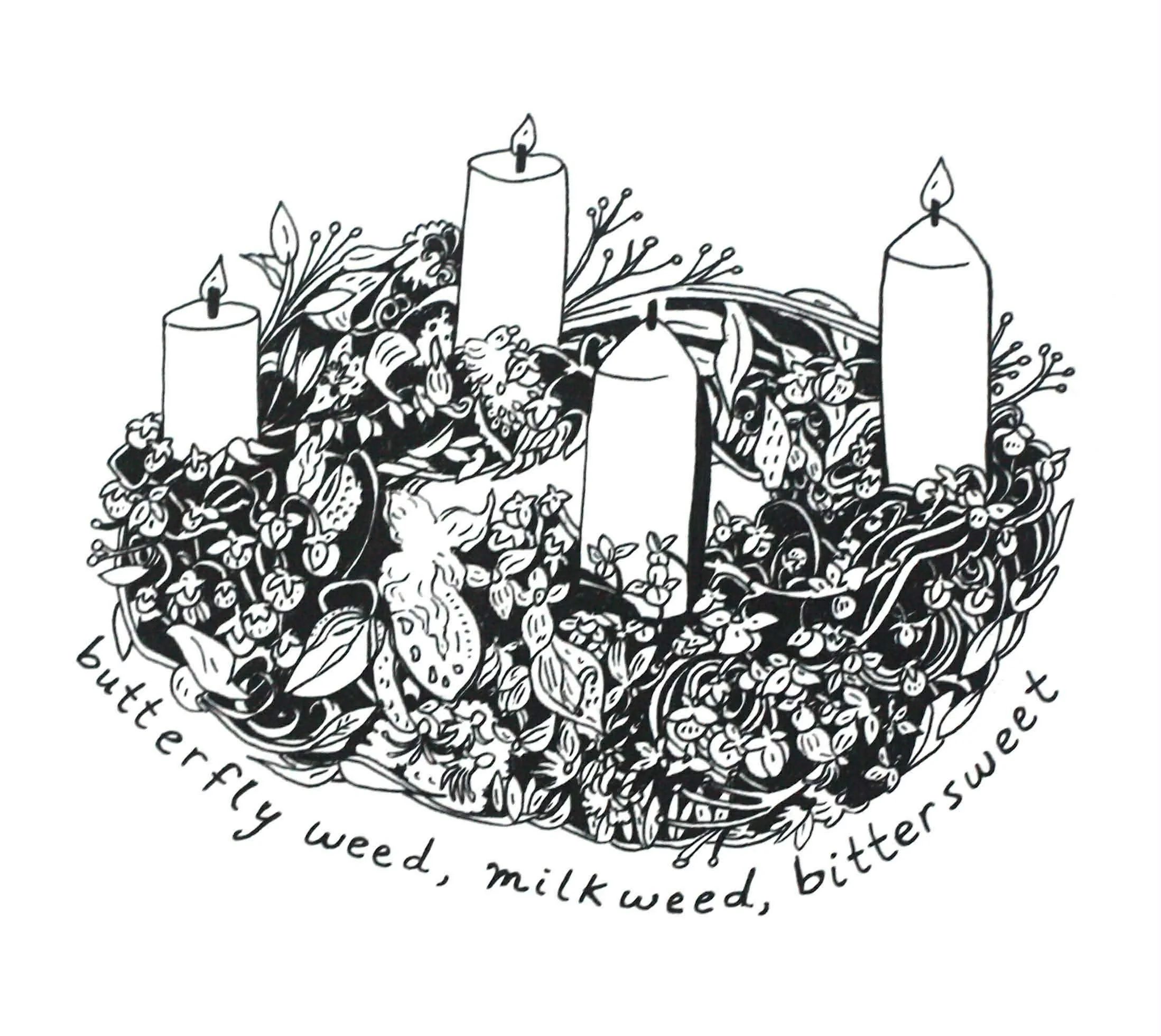
Laurel Dykstra
The lections for Advent 3 are indeed “blossoming abundantly” with what Dong Hyeon Jeong calls vegetal wisdom and Robin Wall Kimmerer calls the intelligence of plants: the blooming crocus, desert plants lush after inundation, sown crops waiting in the soil, a reed in the wind. All of these plants contribute to a composite vision of the goodness, thriving, and justice that God desires for all creation—plants, animals, the hungry, the disabled, the impoverished, the imprisoned. Goodness that stands in sharp contrast with the harms of empire, extraction and accumulation.
For the Advent 3 preacher, wondering if there anything new to say about John or Mary, both of these advent figures have a profound connection to land: Mary walking pregnant through exploited agricultural land to visit her relative Elizabeth, and John the wilderness prophet in the tradition of Elijah.
Commentary
-
Isaiah has many references to wild species from outside the urban environment and the greatest number of references to vines and vine-culture in the prophets. In Isaiah
wilderness is an ambiguous place that is not always hostile. Hillary Marlow says that in Isaiah, non-human creation has a separate identity and an inherent positive value, and that in some cases, God prioritizes the non-human world over humans.
Walter Brueggemann (Texts for Preaching, 20) suggests that verses 1-7 are a chiasm:
(A) the transformation of creation (vs. 1-2)
(B) the transformation of disabled humanity (v. 3)
(C) the assertion of God’s coming rescue (v. 4)
(B’) the transformation of disabled humanity (vs. 5-6a)
(A’) the transformation of creation (vs. 6b-7)”Verses 1-2: Salvation is imagined in terms of creation, as the transformation of desert after rain
The central complex of verses imagine God’s people as a body with weak hands and feeble knees (verse 3), a “fearful heart” (verse 4), blind, deaf, (v. 5) lame, non-speaking (verse 6), a body disabled by the experience of exile, in other words, disabled by social conditions. Note that none of the qualities and attributes associated with salvation: joy, blossoming, physical strength, steadiness, leaping and singing, are incompatible with physical disability.
Verse 6: Deer leaping as a sign of joy
In chapter 35, the desert wilderness remains a desert, but a glad desert that rejoices and blossoms. The flourishing land contrasts dramatically with the land soaked with blood and the soil turned to sulfur and burning pitch in chapter 34:7, 9.
The habitat of jackals (verse 7) is transformed into a swamp and the lion’s absence (verse 9) are a contrast with the preceding chapter (34) where sinful land is judged as habitat of beasts of desolation and predation
Verse 8: the lion free Highway in the desert has strong resonances with the becomes the Discipleship Way of the gospels
-
The psalm verses amplify the themes from the Isaiah passage with an emphasis on economic justice and socially disabled identities.
Verse 5: God’s identity and faithfulness are connected God’s identity as creator of heaven, earth, seas and all (beings) that dwell in them
Verses 6-7: those who are socially and systemically disadvantaged-- the oppressed, hungry, prisoners, blind, bowed down are the recipients of the creators faithfulness
Verse 8: morality/goodness and social group identity (orphan, widow, stranger) are conflated in ways that contrast starkly with how poor people and migrants are portrayed in current (and ancient) political discourse.
-
I have reproduced most of Sylvia Keesmaat’s excellent 2023 commentary on the Magnificat here and below in the preaching suggestions. Find Sylvia’s work at www.bibleremixed.ca.
The journey that Mary made from her home in Nazareth to Elizabeth in the hill country of Judea would have taken about three or four days. She would have gone on foot. While walking she would have seen the oppressive environmental impact of Roman occupation on her land. The “wilderness” that King David had hid in to escape Saul was largely gone; small subsistence farms were in the process of being replaced by larger estates farmed by slaves or day labourers for export crops (wine, grain, olive oil). Men stood around in the village squares waiting for work. She would have realized that the proud were those who had seized land through excessive taxation and extortionate interest on debts. The lowly were those grieving the loss of their land, grieving the loss of their life ways on the land, grieving the loss of the care and affection that they shared with the creatures on their land. She would have realized that those who without food were hungry not because there was a lack of food, but because the wealthy had been harvesting what they did not sow.
This song is rooted in what she would have seen as she walked, deeply rooted in the landscape of her land, deeply rooted in the injustice and oppression she saw on the land as she walked.
Note that Mary also echoes the Song of Hannah from 1 Samuel 2, particularly vv. 4-8, and that Hannah grounds the actions of God for the hungry, the poor and the needy in God’s creation of the earth. Because God is the generous creator, who has established a world of abundance, God will act to ensure that no one goes hungry, no one goes without.
-
The verses that immediately precede this passage speak a prophetic warning to the money-hungry and rich who profit from trade. The audience for today’s lection likely suffered at the hands of the people to whom James spoke in these earlier verses. Patience is emphasized by repetition (verses 7, 8, 10)
Verse 7: The patience of the farmer conjures but the seed waiting in the soil with its resonances with the parables. But, if we take the “fruit of the earth” literally, then the patience of the vine keeper is long, and that of the arborist longer still as they wait to harvest fruit.
Interestingly the word “rain” doesn’t appear in the original Greek text, but is implied in the words “the early and late.”
Verse 8: the words “establish your hearts” appearing right after the patience of the farmer seem to suggest the rootedness or tree or plant.
Verse 10: The theme of the suffering of the prophets resonates with the Gospel where the wilderness prophet John is in prison. The idea of the patience of the prophets is a little entertaining as many were grumblers and complainers.
-
Item description
Sermon suggestions
Plant Wisdom
Four of the readings this week make explicit reference to plants and as Sylvia Keesmaat argues convincingly that Mary’s Magnificat is rooted in her expire walking occupied, exploited agricultural land, the plant-related texts total five. Plants were integral to the lives of our forebears in faith but many of us experience “plant blindness.”
In the season of advent many congregations bring plants into the worship space with an advent wreath, tree or green boughs. This is an opportunity to share knowledge of local plants, increasing community’s watershed literacy, at the start of the service, for children’s instruction or in preaching. What are the local plants in your wreath? Where do they grow? What are their medicinal properties? What are they called in local Indigenous languages? If the wilderness transformation of Isaiah happened in your bio-region what would the plants be?
What are the fruits your congregation is anticipating? What is it like to be a joyful crocus or a reed shaken by the wind.
If you want to draw more broadly from advent images consider the nurse log image of Jesse’s root and shoot in Isaiah and Mark’s “from the fig tree learn it’s lesson.”
“In the Western tradition there is a recognized hierarchy of beings, with, of course, the human being on top—the pinnacle of evolution, the darling of Creation—and the plants at the bottom. But in Native ways of knowing, human people are often referred to as “the younger brothers of Creation.” We say that humans have the least experience with how to live and thus the most to learn—we must look to our teachers among the other species for guidance. Their wisdom is apparent in the way that they live. They teach us by example. They’ve been on the earth far longer than we have been, and have had time to figure things out.” -Robin Wall Kimmerer, Potawatomi Botanist
In Isaiah the highway, the Holy Way in the wilderness resonates with the discipleship way of the gospels. Mary walks the land to visit her relative. When we walk in wild places and cultivated places are we able to listen to the wisdom of our plant teachers?
Mary’s Song of Defiance and Hope was Rooted in Her Long Walk on the Land
It is important to remember that Mary’s song was not something that happened in her head. It was born out of her embodied presence in the landscape, shaped by her feet walking the roads, given passion by the land she saw, the farmers she saw, the oppression she saw as she walked through an occupied territory on her way to Elizabeth’s.
But I also think that walking on the land shaped the hope in Mary’s song: the Psalms are clear that creation shows us God’s steadfast love, God’s compassion, God’s justice, and God’s faithfulness. (eg. Psalms 33; 145). Surely Mary recalled these Psalms as well as she walked through olive groves, as she walked along the riverside, as she saw birds in the trees, and insects flying in the air.
In order to sing Mary’s song today, what are the walks we need to take? Who are the people we need to see? What is the creational destruction that will put a fire in our belly so that we can’t help but sing out? What are the places we need to immerse ourselves in so that we are reminded of God’s faithfulness in creation, God’s great love for beauty and weirdness, God’s compassion for even the smallest creature? When the Creator God acts in faithfulness to the oppressed of the earth, which creatures will be lifted up? Are we singing
Baptist as wilderness prophet
Despite being offstage in prison, John is a powerful presence in today’s Gospel. Although Isaiah in the Hebrew has the voice crying, “in the wilderness make a way” the Septuigent and subsequently the Gospels, translate it such that the voice is crying in the wilderness, emphasizing wilderness as the place of transformation.
Bill Wylie-Kellermann suggests John may have cut his teeth on Isaiah 40, tutored in a desert community with a rigorous manual of discipline like the eschatological purists of Qumran. Luke 1:80 hints that John was raised in the wilderness. In the tradition and history of Israel, the wilderness is the time of preparation, the place of testing and repentance. It is the time to travel light, stripped of excess baggage, vulnerable in emptiness. It is the place of powerlessness where we are fully and perpetually at the mercy of God.
John is compared to the wilderness prophet Elijah (2 Kings 1:8). (1 Kings 17:4–6)–who was fed by ravens and who encounters God in the still small voice in the wilderness. Elijah was expected to return to usher in the Messianic age—an era of justice, healing, equality and abundance.
Jesus apprenticed with John as a wilderness prophet and became a disciple of his watershed. -Ched Myers
Rev. Dr. Vikki Marie of blessed memory called Wilderness the entrance way to hope. She notes John’s radical commitment to return to the land, saying: “Advent is a time to take the opportunity to enter into our own wilderness spaces and prepare the way for the Godseed within us to flourish (James 5:7 and Octavia Butler, Parable of the Sower); a wilderness place where we prepare and wait in joyful hope for Jesus to be born again in our hearts, so that by our actions, we participate in fulfilling God's promise of a renewed earth, where justice is at home.”
With advancing agribusiness and industry for extraction and manufacture, wilderness, wild places are shrinking. How does this impact our connection to prophetic justice traditions?
How have we tried to tame the wild Baptizer and his message of becoming clean by immersion in water? What happens to our sacrament if our waters are polluted? How have we tried to take Jesus out of the wilderness, and the wilderness out of Jesus?
If the wilderness road of Isaiah becomes the discipleship Way, where and how has wilderness-walking been a place of connection, discipleship for you? For your community?
Prison
The redeemed and ransomed walk Isaiah’s Wilderness Highway. The Psalm proclaims “The Lord sets the prisoners free.” Paul, who was imprisoned several times, writes of the suffering of the Prophets, which includes the imprisonment of Jeremiah and Hanani. John is in prison, which must have been particularly painful for the wilderness dweller, and Jesus will be imprisoned.
The hope of Advent is not saccharine or weak, it is borne in struggle and the consequence of naming the sinfulness of our time, and standing with the weak against empire.
With the rise of fascism in North America, with the systemic incarceration of Black and Indigenous communities there are few congregations that would not benefit from hearing that imprisonment is often a consequence of Christian faith and that God desires freedom for prisoners. As Christians for Prison Abolition put it: “Prison abolition is a foretaste of the kingdom of God.”
Sources and Resources
Michael Chan, Commentary on Isaiah 35:1-10
https://www.workingpreacher.org/commentaries/revised-common-lectionary/third-sunday-of-advent/commentary-on-isaiah-351-10-4
Sarah Holst, We are Never Alone, Watershed Advent Workbook
https://www.sarahholstart.com/shop/qmf1tqfvpfaii5408g1u88m355tnok
Robin Wall Kimmerer, Braiding Sweetgrass: Indigenous Wisdom, Scientific Knowledge and the Teachings of Plants
Christians for the Abolition of Prisons
https://christiansforabolition.org/
Jennifer Henry’s feminist rewrite of Mary Did You Know
https://scmcanada.org/2017/12/mary-did-you-know-rewrite/
Jay Beck and Tevyn East modern riff on John as ecoprophet for water
https://radicaldiscipleship.net/2019/01/10/wild-lectionary-song-of-the-baptizer/
Victoria Loorz, Out in the Wilderness, prepare the way
https://radicaldiscipleship.net/2017/12/07/wild-lectionary-the-voice-crying-out-in-the-wilderness-prepare-the-way/
Bill Wylie Kellermann, The wilderness in a very small place
https://radicaldiscipleship.net/2016/12/15/advent-the-wilderness-in-a-very-small-place/
Author bio
Laurel Dykstra is the founding priest of Salal + Cedar Watershed Discipleship Community, a church that worships outdoors and seeks to help Christians in the lower Fraser watershed grow their skills for Climate Justice. Laurel’s latest book Wildlife Congregations addresses the spiritual aspects of interspecies loneliness, in an age of climate crisis and mass extinctions.
Image Description
Advent Wreath Week Three by Sarah Holst https://www.sarahholstart.com/ used with permission. A drawing in black on a white background. A wreath of local plants with four thick candles, three are lit. Hand-lettered words printed beneath the wreath say: butterfly weed, milkweed, bittersweet.