
19th Sunday after Pentecost Year B: Both Prayer and Action
Justin Cheng
The readings for Propers 21 (the 19th Sunday after Pentecost) convey a sense of emergency. Given the grim news of the climate emergency, each month from June 2023 to July 2024 was the hottest on record (CBC July 8, 2024), and its catastrophic effects from extreme weather, warming oceans and loss of habitat, resulting in misery and suffering to all life, both human and nonhuman, the readings stir preachers and congregations to act and pray. My spiritual perspective is that both action and prayer are needed and complement each other. The readings today might offer opportunity to explore that relationship in the context of climate justice.
Commentary
-
If your congregation is not familiar with the Esther story, I would advise providing a quick summary of the text. It is a severe limitation of the lectionary that we only receive a snippet of a story that should be read in its entirety. Esther, a Jew has become Queen of Persia. She has hidden her identity as a Jew until now when her own people are facing genocide, due to the machinations of Haman. To prevent the certain death of her people, Esther reveals her Jewish identity and names Haman as the culprit which results in his execution and the execution of his sons. It should be noted that the violence in the Book of Esther does not end there because in Chapter 9, the Jews defend themselves against their enemies, resulting in the deaths of many non-Jews.
There are a few ways of analyzing this text from an ecological perspective. The threat of genocide in Esther finds resonance in the ongoing ecocide in which countless plants, animals as well humans have experienced and will experience, suffering, pain and death. Considering the rate of extinction, the genocide of creaturely life is not a threat, it is an ongoing, contemporary reality (World Wildlife Fund). Esther can function as symbolic in two ways, she can symbolize us humans as climate activists in sounding alarm in the current moment. Esther’s location is noteworthy, she is both privileged by empire in her position as queen and she is also one of its potential victims as a Jew. As humans, we have been privileged by the current domination system (to use JD Crossan’s phase) at the expense of our nonhuman siblings, but we will also be its potential victims therefore due to our complicity in that system.
Another way to interpret Esther symbolically, is see her representative, not of humanity, but of our non-human creaturely siblings. They who are still alive, are privileged over those who have already perished due to our sins against the earth. And they exercise their voice by pleading for us to change direction, to atone, and to stop destroying the earth. Esther alone, cannot end the genocide, and our creaturely siblings cannot end the ecocide for us. We as humanity are empire, we are the ones that must change to avert disaster.
I will conclude my reading of Esther by critically examining the deaths of Haman, his sons, and the ‘enemies of the Jews.’ It is tempting to draw a simplistic conclusion: Esther speaks, the Jews are saved, and the ‘bad guys’ are eliminated. However, there is more to this story, while Haman is the villain who plots the conspiracy, it is the king who makes the decision to carry it out (Esther 3:11). The fact that Haman is executed does not change the fact that the King, and by extension, Empire, bears ultimate responsibility for the planned genocide.
We rightly demand those responsible for the climate crisis to be held accountable. But holding those responsible for climate change should not excuse us from our own complicity. It is necessary to hold for example, industries who benefit from the current crisis, legally and politically accountable, for their greed comes at the very expense of our planet earth. And yet, holding them responsible alone will not solve the problem which requires our collective metanoia as a species.
-
This Psalm is an interesting one to pair with the Esther reading. The Esther reading is about the moment of decision prior to the potential catastrophe, the Psalm is about looking back, God’s people has survived the catastrophe and is crediting God with the deliverance. Examining verses 4 and 5 considering an ecological reading can be problematic, the ‘waters’ are seen as antagonistic to humans. This made sense in an ancient historical context, when humans feared the raw power of nature, but it makes less sense today when it is the reverse, creation has more to fear from humans than the other way around.
We could interpret Psalm 124 another way. Other Psalms mention creation enjoying and celebrating God’s providential care (ie Psalm 104). Psalm 124 can be a prayer of the creatures of the earth thanking God for their deliverance from their human enemies. In which case, verse 7 might be interpreted literally, the birds fleeing their human oppressors have much to be thankful for.
-
The Numbers passage contains multiple stories that seem at first glance to be unconnected. It begins with the Israelites in the Wilderness looking back to their enslavement in Egypt, and remembering not the coercive violence they suffered, but the food they ate, “the cucumbers, the leeks, the melons, the onions and the garlic”. The people are anxious and frustrated, resulting in Moses being anxious and frustrated in his inability to satisfy them who long for Egypt. In this passage, God does not respond by giving the people what they want, God does not send them back to Egypt, nor does God provide them with food other than the manna from heaven. Rather God responds by blessing seventy elders that Moses has chosen, to shoulder some of the burden of leadership. The passage then ends with two individuals, not among the seventy, Eldad and Medad, who prophesy and Moses explaining that even though they are not initially chosen, that they are legitimate prophets of the Lord.
The Israelites represent all of us who are anxious, frustrated and terrified at this moment in the climate emergency. We are thrown in the wilderness because we have discovered the truth about our current domination system of late-stage capitalism, that instead of bringing us security and prosperity, it has resulted in environmental destruction, systematic poverty and injustice, and widespread suffering for many to promote the benefits of the wealthy elite. The Exodus was our deliverance from being enslaved to that ideology. But after being delivered, we are in the wilderness, and we are tempted to look back, to believe in the same lies of the domination system. Or in the context of the climate emergency, to believe that late-stage capitalism can save us, ie. Oil companies who pledge to do more environmental measures while still increasing emissions.
Moses symbolizes us who repeatedly must speak truth to people, tempted to return to the old, failed ideology. And it is frankly exhausting, whether refuting the misinformation of climate deniers or protesting again, and again those who see the climate crisis as an opportunity to make money for themselves at the expense of the planet and all her inhabitants. The Divine One answers our frustration not by taking away our holy work of speaking and expressing truth, but by calling others to share the burden of that holy work. We cannot do this work alone, and we must let go of any notion of either ourselves as individuals or even as individual faith communities of being saviours of the planet alone. We must view our work as collective, we may not be the strongest or most influential voices, and we must be willing to allow others, even outside the church, to lead. The calling of the seventy elders and the calling of Medad and Eldad remind us that the Divine One may call anyone to this holy work and we must not only accept this but celebrate this in the interests of the greater good of climate justice.
-
It is disappointing that the lectionary omits the first six verses of this Psalm. Psalm 19:1-6 begins with “the heavens are telling the glory of God” and ends with the sun rising and falling as a ‘bridegroom from his wedding canopy,” These offer reflection on the beauty and wonder of creation.
But sticking to the assigned reading, we might reflect first on the ‘law’. Verse 7 mentions the law, since it comes after the mention of the heavens and the sun, we might be able to discern this law not only referring to the specific law of Moses, but the law that governs creation. We might also mention here that even the specific law of Moses has ecological implications, such as the Sabbath of the Land in Leviticus 25. Whatever law one refers to, the law of creation and/or the law of Moses, we can reflect that the essence of law is right relationship. Another way of framing Psalm 19:7-14 might be: to be in right relationship with the Divine, with creation, with ourselves, is the ground on which one can speak truth (verse 14), Verse 14 is a familiar one for some of us as it is a common opening for sermons. We can only speak to God and on behalf of God, if we have a right relationship with God and with creation. I do not view this as an occasion for guilt or self-loathing, but a call for self-examination and discernment. If I speak about climate justice, how am I living a life of climate justice? And if that gap is wide, as it may be for most of us, how can I try to narrow that gap.
-
Congregations who have been listening to James for the last few weeks in the lectionary would understand that James is not one for ‘thoughts and prayers’ as a substitute for action. Recall James 2:26 ‘Faith without works is dead.’ With that in mind, we can look at the James reading today, which does mention prayer, hymn singing, and confession, traditionally seen as ‘spiritual things’ as opposed to activity in the world. Considering the climate crisis, the relevant sickness is climate anxiety and guilt. Many of us are anxious about the enormity of the problem and that piecemeal actions are insufficient for necessary systemic change. Many of us feel guilty about our complicity in the ongoing ecocide. Anxiety and guilt, like all emotions are neither ‘good’ nor ‘bad’. The key thing is whether those emotions either spur action or paralyze us from acting. James’ counsel for us to pray, to sing, to confess our sins, may help us navigate those emotions so that we are not paralyzed.
James’ call for prayer is collective, church leaders or ‘elders’ pray and anoint people (v. 14) and fellow believers are to confess their sins to each other (v. 16). This reminds us that as people must act together, they must also pray together.
Finally, the allusion to Elijah praying for rain is about the effectiveness of prayer (17-18). Different Christians may disagree over whether the story of Elijah’s miracles should be taken literally or symbolically. However, one problematic reading is to interpret this allusion as asking the Divine One to magically solve climate change without our own human contribution. Being aware of different perspectives concerning divine intervention and activity, a better approach might be asking the Divine One to address climate change both through our own human hands, and through any other means. My own theological perspective is ‘both/and’. We humans are called to do all that we can, while being open that the Divine One is free to act however they choose. To return to anxiety and guilt, the Divine One’s gracious gift of forgiveness and peace may be the only thing that can calm us and make us ready to act in the ways we need to act.
-
John said to Jesus, “Teacher, we saw someone casting out demons in your name, and we tried to stop him, because he was not following us.” But Jesus said, “Do not stop him; for no one who does a deed of power in my name will be able soon afterward to speak evil of me. Whoever is not against us is for us. For truly I tell you, whoever gives you a cup of water to drink because you bear the name of Christ will by no means lose the reward.
“If any of you put a stumbling block before one of these little ones who believe in me, it would be better for you if a great millstone were hung around your neck and you were thrown into the sea. If your hand causes you to stumble, cut it off; it is better for you to enter life maimed than to have two hands and to go to hell, to the unquenchable fire. And if your foot causes you to stumble, cut it off; it is better for you to enter life lame than to have two feet and to be thrown into hell. And if your eye causes you to stumble, tear it out; it is better for you to enter the kingdom of God with one eye than to have two eyes and to be thrown into hell, where their worm never dies, and the fire is never quenched.
“For everyone will be salted with fire. Salt is good; but if salt has lost its saltiness, how can you season it? Have salt in yourselves and be at peace with one another.”
‘Whoever is not against us is for us’ (Mark 9:40) The passage begins with the disciples telling Jesus that they tried to stop another person, not part of their group, from casting out demons in the name of Jesus. This unknown person is not part of the community, but he nevertheless performs the ministry of healing and exorcism in Jesus’ name.
Applied to the climate emergency, this unknown person represents the people outside of our community who nevertheless do the mission of repairing and speaking out for the Earth and all its creatures. This includes people of other faiths and people who do not identify as religious. Jesus invites us to an expansive vision; we must be able to join in solidarity with those who differ from us on a common mission on behalf of the earth.
‘Stumbling Blocks’ in the second part, would refer to any obstacle we as Christians place ahead of protecting and healing the earth. These obstacles might be our own personal theological commitments, our clinging to Christian supremacy that prevents us from learning from those who are not Christian, our discomfort with more radical actions, or anything that gets in the way of addressing the climate emergency. Understood ecologically, the ‘hell’ that is mentioned is not about an afterlife, it is our burning planet that suffers. If we put anything before the healing of the earth, then the result is we experience the effects of our devastation and destruction.
The cutting off and tearing off commands are then about removing obstacles that get in the way of the work of healing the earth. It may involve deconstructing privilege of every kind, Christian privilege that ignores or minimizes the insights of other wisdom traditions, especially in light of our colonial context, the insights of Indigenous traditions, economic privilege that prioritizes wealth over the flourishing of every creature, both human and non-human alike, or our own personal privilege and status in our society. These obstacles get in the way of genuine solidarity not only with people of other faiths or people of no religious faith, but also with every creature on this earth. Solidarity with all is necessary for the healing of our planet as well as the healing of everyone.
Jesus ends this passage by stating enigmatically ‘if salt has lost its saltiness, how can you season it’ (v.50). If salt is no longer salt, then it is no longer useful. Matthew expands on Mark by stating:” It is no longer good for anything but is thrown out and trampled under foot.” (5:13). We as Christians demonstrate our usefulness, not by our theological commitments or our privileges, but in our participation in the building up of God’s reign on earth. In clinging to those obstacles, we diminish our usefulness in acting according to our true purpose. This insight can help us reflect on our throwaway society. One component of environment degradation is our waste, we throw away stuff that we no longer find useful. If we as Christians, or even as human creatures are not useful in the healing and flourishing of creation, might we risk being thrown away by mother earth. I remember the words of a leader in my retreat on creation spirituality at the Society of St John the Evangelist. He warned us that Mother Earth may indeed decide to wipe us out as a human species, if we cause harm to her and/or to other creatures. While this may sound ominous or uncaring, perhaps we should take that as an invitation to be the salt of the earth, to bring flourishing and healing to our creation. We may indeed discover our ‘saltiness’ or ‘usefulness’, if we change our ways, and become healers of our beloved creation.
Teaching and Preaching Ideas
Giving Voice to Creation
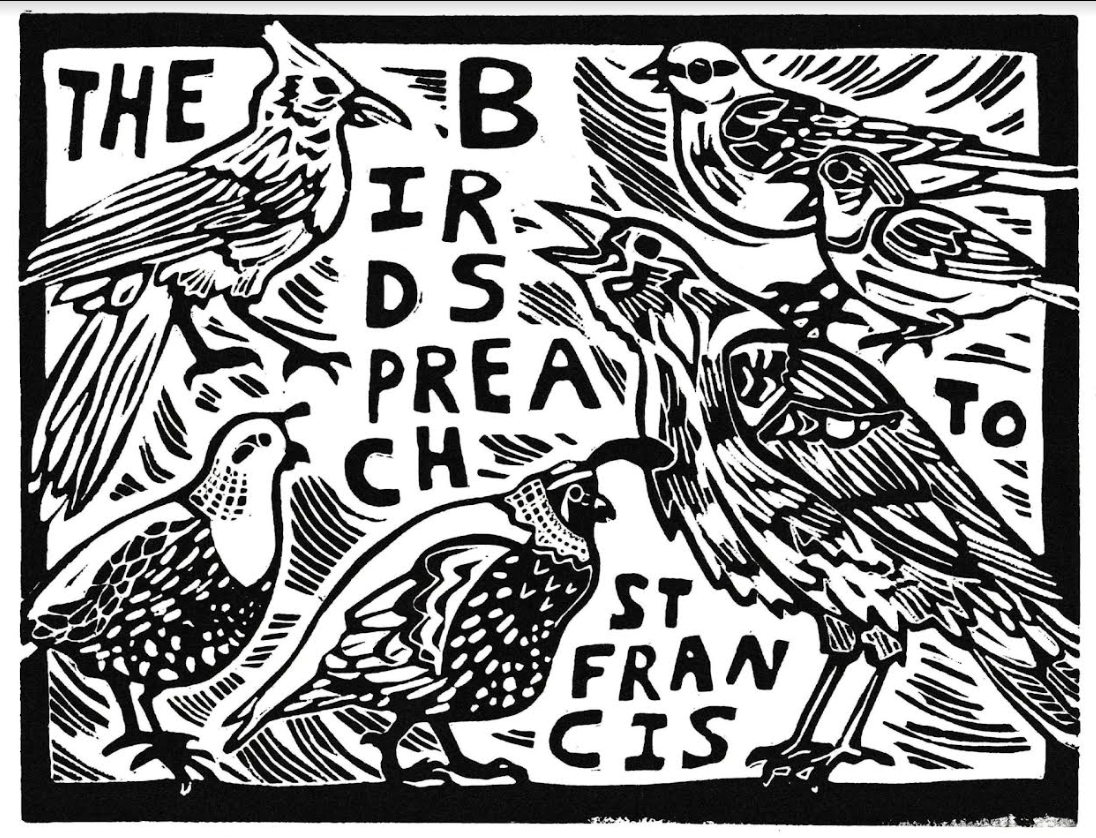
Often, we imagine humans as active and creation as passive. This is present in creation preaching ‘we are called to save the earth.’ There is a place for human agency, and it is us as humans to repair because we are the ones who have caused the brokenness. However, with the Esther story, might we imagine Esther as a non-human creature, pleading with us, to amend our ways? Or even the Gospel’s warning about hell, as problematic as that is, as creation speaking to us about the consequences of our actions? One could even interpret the suffering ones in the Epistle of James, to refer to the suffering creatures of the earth. Taken James’ overall view of faith and works, prayer and action as both necessary, the letter’s exhortations can be a call to heal the suffering ones of creation. Preachers who explore this, may help our congregations to reconceptualize their relationship with other creatures. Given that this is the Sunday before St Francis Day, preachers can link these scriptures with St Francis and his reputation of calling his non-human friends, his siblings.
In my tradition, the Anglican Church of Canada, many churches will not be using these readings but will be celebrating the Feast of St Michael of All Angels. However, if your community is using these ordinary Sunday readings, perhaps you can preach on genuine relationship between all creatures, between supernatural angels/spirits, humans, and all creatures. Genuine relationship means ascribing dignity and honour to all, from the smallest insect affected by environmental change to the mysterious angels in heaven. Personhood, dignity and honour are not exclusive to humans but are given to all creatures.
The Need for Human Action
Both Esther and the Gospel point to the need for human action in response to this crisis. Esther seems the obvious model, in her speaking out at great risk to her life. The unknown person performing exorcism in the Gospel spurs us into action by his example. Preachers who have congregations that may be passive in the light of the crisis, may find Esther and the Gospel springing boards to provoke their people to do more action in response to the climate emergency. Preachers who focus on the Gospel may also reflect on that the Divine One may work through people outside our community, we may be called to not only work with, but also follow their lead and example. I can think of a recent example of Christians and non-Christians following the example of Greta Thunberg, who as far as I know, does not identify as religious.
The Role of Spirituality in Climate Action
Theme #2, the need for human action, may apply to communities that are passive on this issue. Theme #3, the role of spirituality may apply to communities who are tired and anxious about their work. Both Numbers and James offer opportunities for preachers to tend their congregations pastorally. Numbers reminds people that they do this work not alone but do this work with the Divine One and with their fellow human siblings together. Working collectively means reducing burnout and stress to enable resilience in this long work of mending creation. James’ offers prayer, confession and other spiritual disciplines to uplift our spirits. As noted in my commentary on James, spiritual disciplines are not about distracting people from necessary work and action, they are about enabling that work and action by offering space to rest, pray and reflect.
Sources and Resources
Bibles/Bible Commentaries
The Jewish Study Bible. New York: Oxford University Press, 2004.
The Jewish Annotated New Testament. 2nd Edition, New York: Oxford University Press, 2017.
New Oxford Annotated Bible. Third Edition, New York: Oxford University Press, 2001.
First Nations Version: An Indigenous Translation of the New Testament. Downers Grove, Illinois: Intervarsity Press, 2021.
Online Bible Commentaries
https://www.workingpreacher.org/
Sources relevant for Climate Action
Fonda, Jane. What Can I Do? My Path from Climate Despair to Action. Penguin Press, 2021.
Thunberg. Greta. The Climate Book: Facts and Solutions. Penguin Random House, 2023.
World Wildlife Foundation “What is the sixth mass extinction and what can we do about it?”
https://www.worldwildlife.org/stories/what-is-the-sixth-mass-extinction-and-what-can-we-do-about-it
Singh, Inayat, “We've had 12 months of record-breaking global heat. How close are we to passing the 1.5 C limit?”https://www.cbc.ca/news/science/global-warming-copernicus-1-5-c-1.7257223
Season of Creation 2024 Celebration Guide for Episcopal Parishes https://newcreationliturgies.org/seasonofcreation/
Contributor Biography
Justin Cheng (he/him) is an Anglican priest, currently ministering in All Saints Burnaby on the ancestral and unceded lands of the hən̓ ̓qəmin̓əm̓ and Sḵwx̱wú7mesh speaking peoples. Justin’s primary ministry in environmental justice is in reflecting with his congregation in bringing ecological and social justice concerns in their learning of the Bible and the Christian tradition.
Image
The birds preach, 2019 Lino cut by Sarah Fuller
Six birds are surrounded by disjointed letters that spell out “the birds preach to st. francis”